



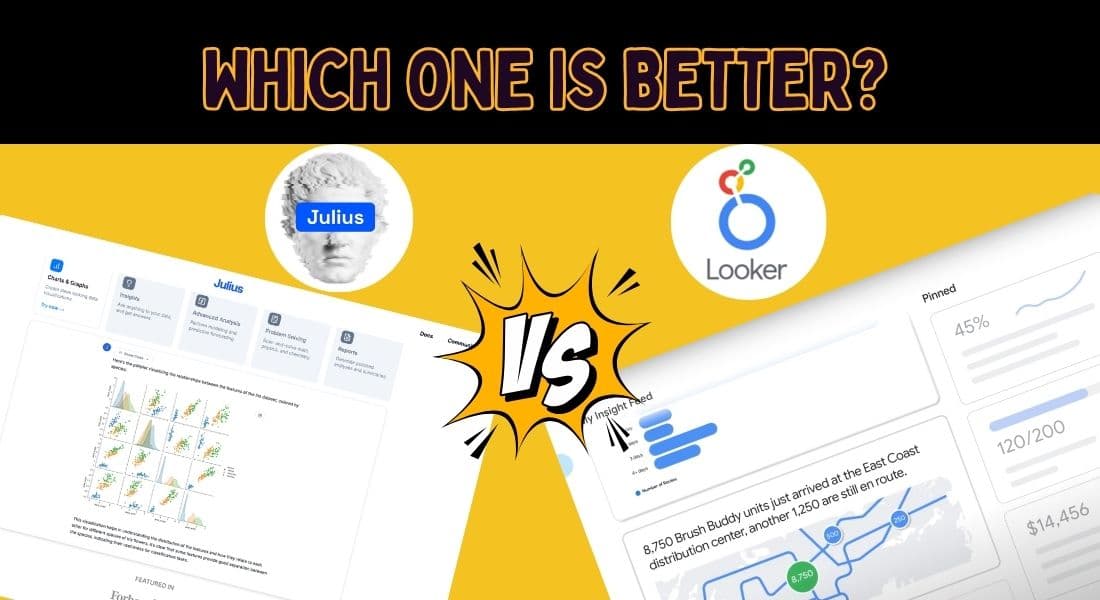
We’re all drowning in data these days—website clicks, campaign ROI, customer engagement metrics—you name it. If we could print out all this information, the pile of papers would crush us all. That’s why reliable AI tools are absolute game-changers when it comes to making sense of the chaos. But the burning question remains: Julius AI vs Looker AI—which one should you hitch your wagon to?
Here’s the thing. Both platforms shine in their own ways, but they’re made for different types of users. Whether you’re aiming to track influencer campaigns or unlock the power of enterprise-level data analytics, you’ll walk away from this post knowing if Julius AI or Looker AI deserves the key to your kingdom.
I. TL;DR: Julius AI vs. Looker (Because We Know You’re Busy)
- Julius AI is the go-to for marketers, academics, researchers, influencers, and small teams that want powerful yet approachable tools for campaign and influencer data analytics.
- Looker AI? It’s built for larger organizations with data-savvy teams who demand enterprise-grade business intelligence and don’t mind rolling up their sleeves for slightly more complex setups.
Got it? Cool. Now, let's dig deeper into this Julius AI vs Looker AI showdown.

II. Julius AI: Your New Data Sidekick for Simpler Analytics
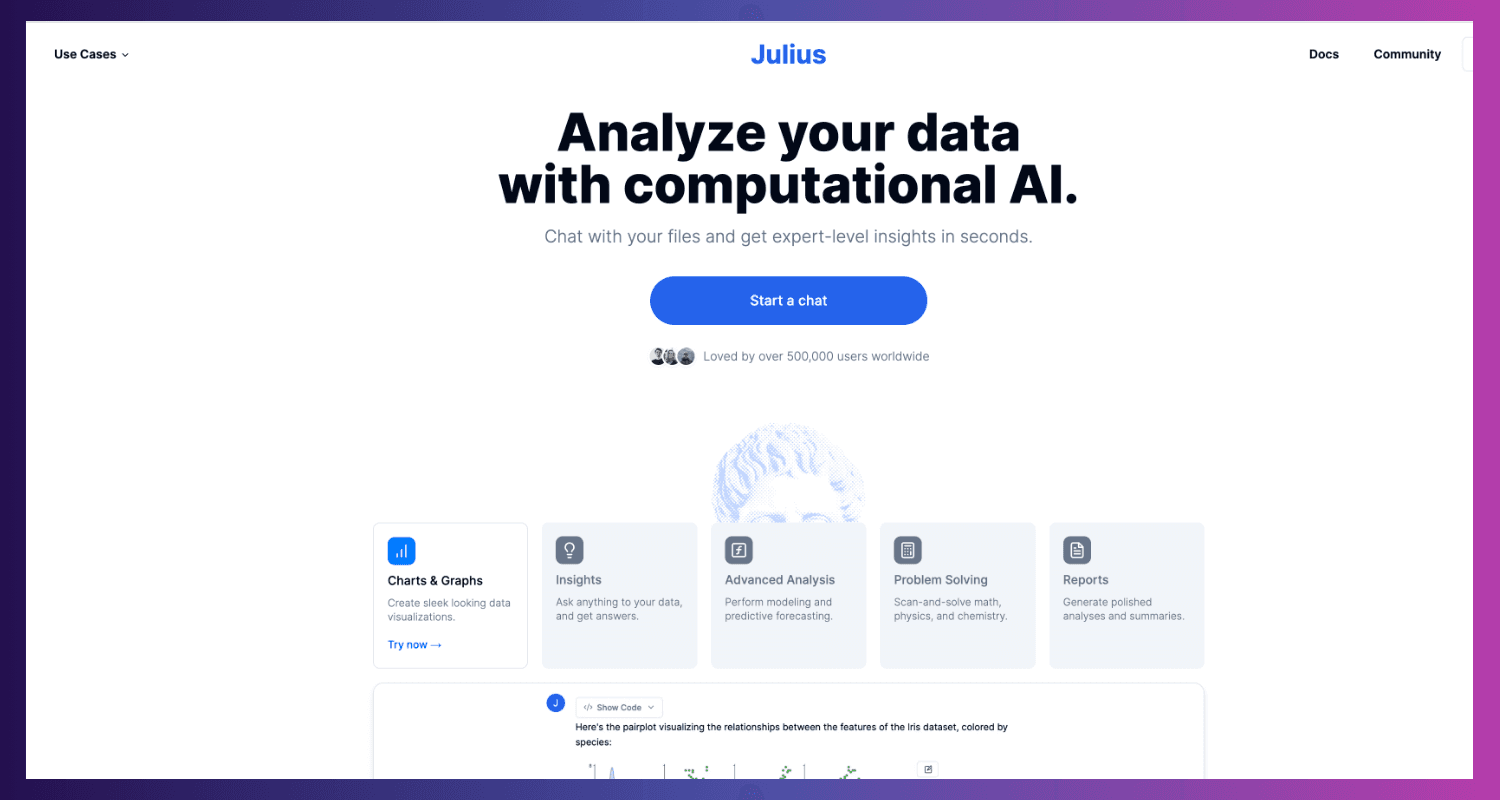
Julius AI isn’t trying to be everything to everyone, and that’s its charm. Instead, it focuses on making life easier for marketers, content creators, and small business owners who just want results without wrestling with complex tools. It’s basically your friendly, no-BS AI-powered assistant.

Why Julius AI Rocks:
- Natural Language Superpowers: Hate talking to code? Same. Julius AI lets you ask plain-English questions about your data, like, “What’s my campaign ROI for September?” No formulas. No headaches. Just answers.
Analyzing Market Data
- Influencer Campaign Wizardry: Running influencer campaigns? Julius AI is all over it. From tracking engagement to breaking down metrics like reach and conversions, this tool stands out for data analytics in influencer marketing.
- Visuals That Convert Doubters: Whether it’s pie charts, animated graphs, or GIF-style data highlights, Julius AI smashes the boring spreadsheet stigma. Communicating trends and performance results has never been this fun.
Creating PDFs and PowerPoint Presentations
- Multimedia Machine: Numbers are just the start. Julius AI also analyzes images, videos, and PDFs. Got data spread across different formats? This platform has you covered.
- Budget-Friendly (Yes, Really!): Tired of tech tools gouging your wallet? Julius AI offers a free plan and premium packages start at $20/month. When stacking up the value, this pricing makes it the best AI platform for actionable insights for individuals or smaller teams.

Real Talk:
- Best For: Academics, researchers, campaign creators, and small-business owners who need great insights FAST without hiring an entire data team.
- Cons: Likely not enough firepower for huge companies that require enterprise-scale data solutions.
Bottom Line? Julius AI turns messy campaign numbers into effective, easy-to-understand outcomes. If you value simplicity without sacrificing depth, this one’s for you.
III. Looker AI: The Data Titan
Now, if Julius AI feels like your friendly neighborhood assistant, Looker AI is its battle-hardened big sibling. Packed with serious horsepower, Looker thrives in enterprise environments where mountains of data need to be wrangled into dashboards that don’t just look cool—they drive serious decisions.
The Magic of Looker AI:
1. Built for Big Data Nerds: Looker’s edge lies in its proprietary LookML. Think of it as a blueprint for organizing data, ensuring that whenever your team touches a dataset, everyone’s speaking the same language. It’s a sanity-saver at scale.
2. Advanced Business Intelligence: If you need reports and dashboards driven by multiple complex datasets, Looker has this nailed. This makes it ideal for companies eyeing the business intelligence vs marketing tools debate—because it wins the BI part easily.
3. Team Collaboration Heaven: Looker doesn’t just throw out dashboards; it integrates seamlessly into workflows. Need Slack to buzz your sales team when a quarterly metric hits its target? Done.
4. Google Cloud Bonus: Hey, it’s Google-backed. That means you get enterprise-grade security and all the integration goodness that comes with tapping into their ecosystem.
5. Looker Blocks = Fast Solutions: Why reinvent the wheel? Looker offers pre-built analytic modules (a.k.a. Looker Blocks) so you can deploy reports and dashboards in a fraction of the time.

The Price of Power:
- Best For: Data analysts, enterprise teams, and anyone comfortable with technical tools.
- Cons: Not exactly plug-and-play. You’ll need a dash of LookML expertise (or someone in the team who knows their stuff) to unlock its full potential.
Looker AI is a choice for companies that treat data as a central part of their strategy. If that’s you, it’s going to feel like magic.
IV. Julius AI vs Looker AI data visualization comparison! The Table You’ve Been Waiting For:
| Feature | 🛠️ Julius AI | 🚀 Looker AI |
| Ease of Use | Natural language, idiot-proof | LookML knowledge required for next-level use |
| Audience | Marketers, small businesses, Academics and researchers | Enterprise data teams and BI pros |
| Best For | Influencer campaigns, small data projects | Complex datasets, enterprise BI |
| Visualization Power | Interactive charts, animations, unique style | Robust, customizable dashboards |
| Security Level | Simple platform security | Enterprise-grade security from Google Cloud |
| Integrations | Python/R-compatible workflows | Google Cloud, Slack, Salesforce |
| Price | Free + paid plans starting at $20/mo | Custom pricing based on team size & needs |
| Unique Strength | Campaign-focused simplicity | Enterprise-level scale & advanced modeling |
Fair to say both Julius AI and Looker AI have carved out their own niches. The ideal choice? It boils down to your toolkit needs and technical chops.
Now that we’ve compared their features side-by-side, let’s see how Julius AI and Looker AI perform in real-world scenarios with these case studies.
V. Case Study: Julius AI vs. Looker AI in Real Life
Data tools are like gear for a hike. You need the right fit for the task. Julius AI and Looker AI solve different problems for different users. Here’s how they proved their worth in real scenarios.
5.1. Julius AI: Simpler Tools for Academic Research
The Problem: A group of researchers struggled with messy survey data. They needed a quick, easy way to get answers. They didn’t have time—or the skills—for complex tools.
The Solution: Julius AI stepped in and made the process painless.
- Natural Language Queries: Researchers asked things like, “What trends show up this quarter?” Julius answered with clear insights.
- Automatic Visuals: The data turned into charts and graphs. No more boring spreadsheets.
- Multi-Format Analysis: They handled everything from PDFs to Excel files without extra software.

The Results: With Julius, the team cut analysis time by 50%. They understood their data better and wowed stakeholders with clean, simple visuals. No need for expensive consultants or extra training.
Who’s It For: Julius AI is perfect for small teams or individuals. If you need quick, clear answers without technical know-how, this is your tool.
👉 Discover how Julius AI simplifies survey data analysis for researchers here.
5.2. Looker AI: Data Power for MLB
The Problem: Major League Baseball needed structure. Each of its 30 teams used inconsistent methods for analyzing data. Teams were disconnected, slow, and struggling to collaborate.
The Solution: Looker AI made sense of their mess.
- Unified Modeling: LookML created clear, standard data systems for all teams.
- Custom Dashboards: Each team got tailored tools to explore ticket sales, merchandise data, and more.
- Workflow Integrations: Alerts for key metrics went straight to Slack, keeping teams efficient and informed.

The Results: Reports that took days now took hours. Teams worked together, data drove smarter decisions, and MLB’s fan strategies improved. Time wasted on repetitive tasks dropped by 70%.
Who’s It For: Looker AI fits large organizations. If you manage complex data at scale and have skilled analysts, it’s your best bet.
👉 Discover how MLB leveraged Looker AI to revolutionize their analytics. Read the full case study here.
5.3. The Right Tool for You?
If you want simplicity, go with Julius AI. If you need power for massive data, choose Looker AI. Test both to see which suits your needs. The right tool makes all the difference.
VI. Verdict Time
When it comes to Julius AI vs Looker AI, here’s the TL;DR one last time:
- Choose Julius AI if you’re an Academic, researcher, content creator, or small team hunting for AI-powered tools to nail data analytics in influencer marketing or campaign tracking. It’s intuitive, affordable, and packs plenty of visual flair.
- Pick Looker AI if your business lives in spreadsheets, custom dashboards, and serious BI workflows. It’s pricier, but the features are worth it for large-scale operations with robust data needs.
Still unsure? Both offer trials or demos, so don’t just take our word for it. Kick the tires yourself and see which feels like home.
Your data deserves a sidekick—make sure it’s the right one!

VII. Summary of Julius AI vs Looker AI
Julius AI and Looker AI are both powerful tools for data analysis, but they serve very different audiences and use cases.
- Julius AI is ideal for Academics, researchers, small teams, and content creators who need simple, intuitive tools to analyze campaign and influencer data. Its standout features include a natural language interface, multimedia analytics, eye-catching visualizations, and machine learning capabilities, all at an affordable price starting at $20/month.
- Looker AI, on the other hand, is geared toward large organizations and data professionals. It specializes in enterprise-level business intelligence, boasting robust data modeling with LookML, secure integrations with Google Cloud, and customizable dashboards for complex datasets. Its flexibility makes it perfect for teams seeking scalable, advanced solutions.
The key difference lies in their complexity and target users—Julius AI is user-friendly and budget-friendly, while Looker AI is a high-powered solution for advanced data needs. Readers are encouraged to explore demos or free trials of both platforms to determine which aligns best with their goals.
Julius AI and Looker AI will transform your analytics. They're for you, whether you seek simplicity as a small business owner or need to scale as a data-savvy enterprise. Try both and discover which platform is the perfect fit for your journey to smarter, faster decisions.
Take the Next Step in Your Data Journey
Now that you’ve got the lowdown on Julius AI vs Looker AI, it’s time to put knowledge into action. Why not see for yourself which platform fits your needs?
👉 Try Julius AI with their free plan and see how effortless it feels to analyze data and crush your marketing goals.
👉 Or book a Looker AI demo to explore its enterprise-level features and find out if it’s the powerhouse your team has been waiting for.
Don’t just leave your data sitting in the shadows—tap into the full potential of AI and make smarter, faster decisions starting today!
If you're a researcher, student, or small business, check out this Julius AI review to discover how no-code AI tools can revolutionize your data analysis!
👉 Looking for more insights? Don’t miss our detailed comparisons of Julius AI vs. Tableau and Julius AI vs. Power BI to discover which tool aligns with your goals.
VIII. FAQs About Julius AI vs. Looker AI
1. What is the main difference between Julius AI and Looker AI?
Julius AI is designed for marketers, influencers, and small teams who want an approachable, user-friendly tool for data analytics. It specializes in campaign tracking and influencer marketing. Looker AI, on the other hand, is built for enterprise-level business intelligence, offering advanced data modeling and analytics tools aimed at larger organizations with more complex data needs.
2. Who should use Julius AI?
Julius AI is perfect for individuals or teams who may not have technical expertise but still need actionable data insights. Its superpower lies in natural language queries, multimedia analytics, and affordability, making it a top choice for marketers and small businesses.
3. Who benefits most from Looker AI?
Looker AI is best suited for data professionals and enterprise teams handling large, complex datasets. It excels in business intelligence, offering powerful data modeling with LookML and integrating seamlessly with Google Cloud services.
4. Can Julius AI handle multimedia and non-spreadsheet data?
Yes! Julius AI can analyze images, PDFs, videos, and spreadsheets, making it an ideal choice for varied data sources, especially in marketing and content-rich projects.
5. Is Looker AI difficult to use?
Looker AI has a steeper learning curve, especially if you're not already familiar with LookML, its proprietary modeling language. However, once mastered, it offers unmatched customization and scalability for larger teams.
6. How much does Julius AI cost?
Julius AI offers a free plan for small-scale use and paid plans starting at $20/month. It’s one of the most budget-friendly data analytics tools for individuals and small teams.
7. What about Looker AI’s pricing?
Looker AI follows a custom pricing model based on the number of users, data volume, and deployment scale. It’s generally more expensive than Julius AI, but its features cater to larger organizations with significant data needs.
8. Do these tools offer integrations with other platforms?
Yes! Julius AI integrates with Python and R workflows, making it versatile for smaller data projects. Looker AI offers integrations within the Google Cloud ecosystem and tools like Slack and Salesforce for collaborative workflows.
9. Which platform is better for influencers and content creators?
Julius AI is the go-to choice for influencers and content creators, thanks to its focus on influencer campaign insights and multimedia analytics.
10. Can I try Julius AI or Looker AI for free before committing?
Absolutely! Julius AI has a free plan for users to explore its capabilities. Looker AI also offers demos that allow potential users to assess its features before making a purchase.
