


Find out which 22 AI marketing technologies are now being used by some of the biggest brands. Find out how artificial intelligence is being used by marketing teams to expand quickly.
AI marketing technologies are being used by some of the biggest brands, such as Google, IBM, and Airbnb, in order to obtain a competitive advantage. The top AI marketing tools available right now are some of the ones we've found and have included below.
The development of AI software has permanently altered the mysterious field of marketing. It might be challenging to determine which of the hundreds of these tools available today will offer the best value.
Focusing on the specific goals you have for your AI marketing tool is crucial, so let's begin by figuring out what artificial intelligence is particularly good at and what it can accomplish for your company.
What uses does AI have in marketing?
Data will be the most important tool in marketing in 2024. You need to know about your competition, market trends, and what customers and future buyers are saying about your product. Although there is a wealth of material available, it is difficult to source by hand. AI greatly simplifies this process. It completes tasks that would be laborious to complete by hand swiftly and efficiently.
Methods such as sentiment analysis can be employed to combine favorable and unfavorable product reviews. Using competitor information, you may stay informed about the actions of competing brands. Better targeting will increase the return on investment (ROI) of your marketing campaigns. To assist you keep up with the internet's constant demand for information, there are even AI-driven systems that can produce innovative material (SEO optimization).
You'll probably employ multiple AI-powered software applications. In actuality, the majority of data manipulation solutions available today leverage automation and machine learning to provide amazing results at scale. We've outlined the functions, advantages, and potential drawbacks of each of these top AI-powered applications and platforms in this list.
The top 22 AI marketing tools for business expansion in 2024
The following 22 AI marketing solutions are essential to try by 2024:
1. Jasper AI (for copywriting)
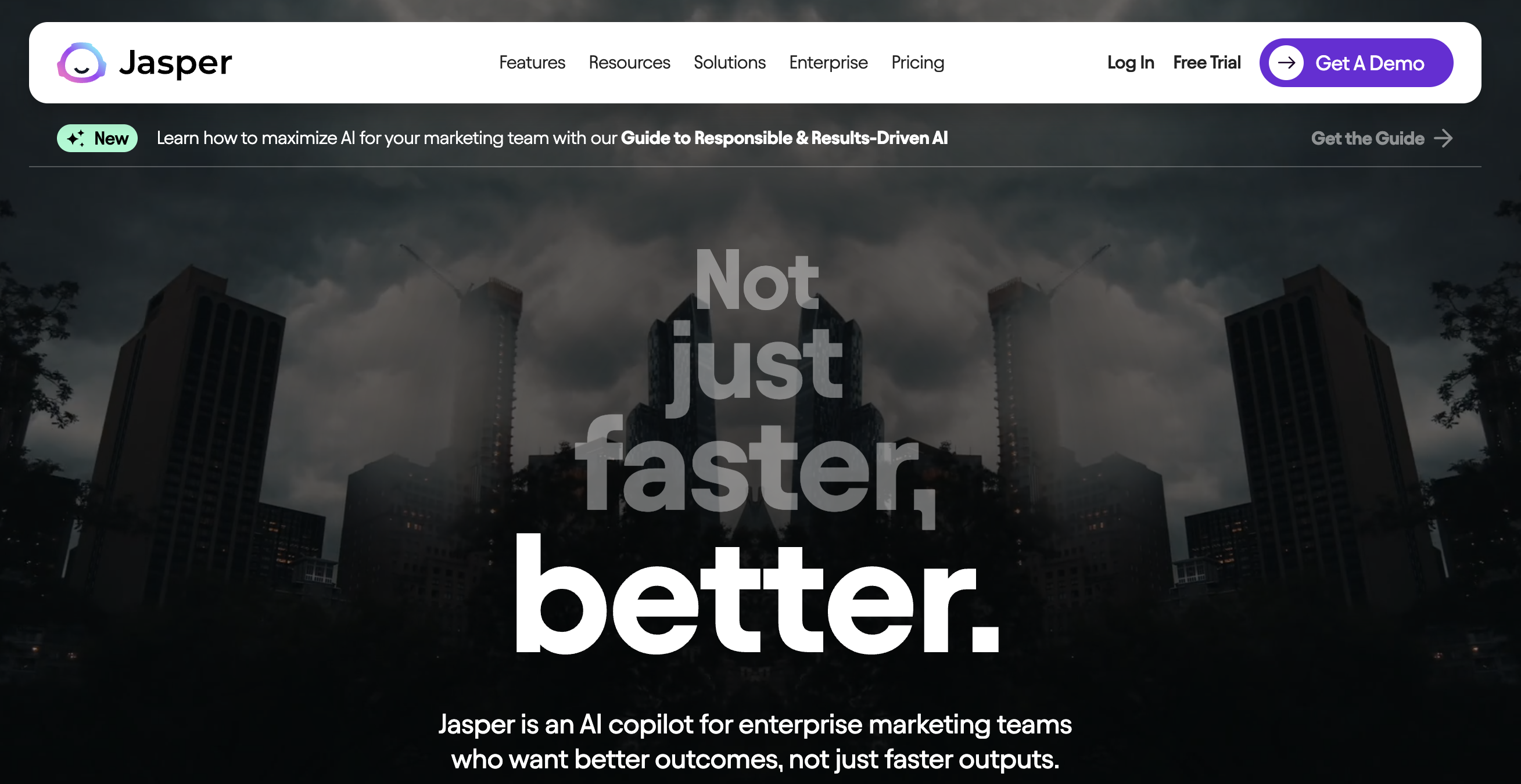
The creators of Jasper, the most well-known AI-powered copywriting system, soon fell prey to their own popularity. Once they had over 350,000 users, Marvel issued them a cease-and-desist letter. Previously, their AI went by the name Jarvis, a playful homage to Tony Stark's (AKA Iron Man) virtual assistant. Jasper was reborn as a result.
This human writer must regretfully admit that Jasper is quite adept at writing copy on whatever subject you can throw at it, in a variety of tones and styles. According to its developers, it has "read" 10% of the internet. How productive is Jasper? I requested Jasper to write 40 words about AI in business automation using a free trial. It produced:
The next development in corporate automation is AI. AI has played a key role in streamlining corporate procedures. For a specific strategic goal, AI can be used into an organization's business processes to boost productivity, reduce expenses, and enhance customer service.
While there is some repetition and a need for human assistance to understand the copy's flow, this is undoubtedly a respectable beginning. It's probably better to think of Jasper's natural language processing as a tool for producing rough manuscripts that human copywriters can refine later.
Jasper can write any type of content you need, including blog posts, landing page copy, product descriptions for e-commerce products, and email campaigns.
It is cheap to adopt, has an easy-to-use dashboard, and will expedite the process of creating content. Jasper, with its 5,000+ 5-star product ratings, won't make you the next Tolstoy, but it will maintain those crucial top SEO page rankings.
2. Lexica Art (for blog thumbnails)
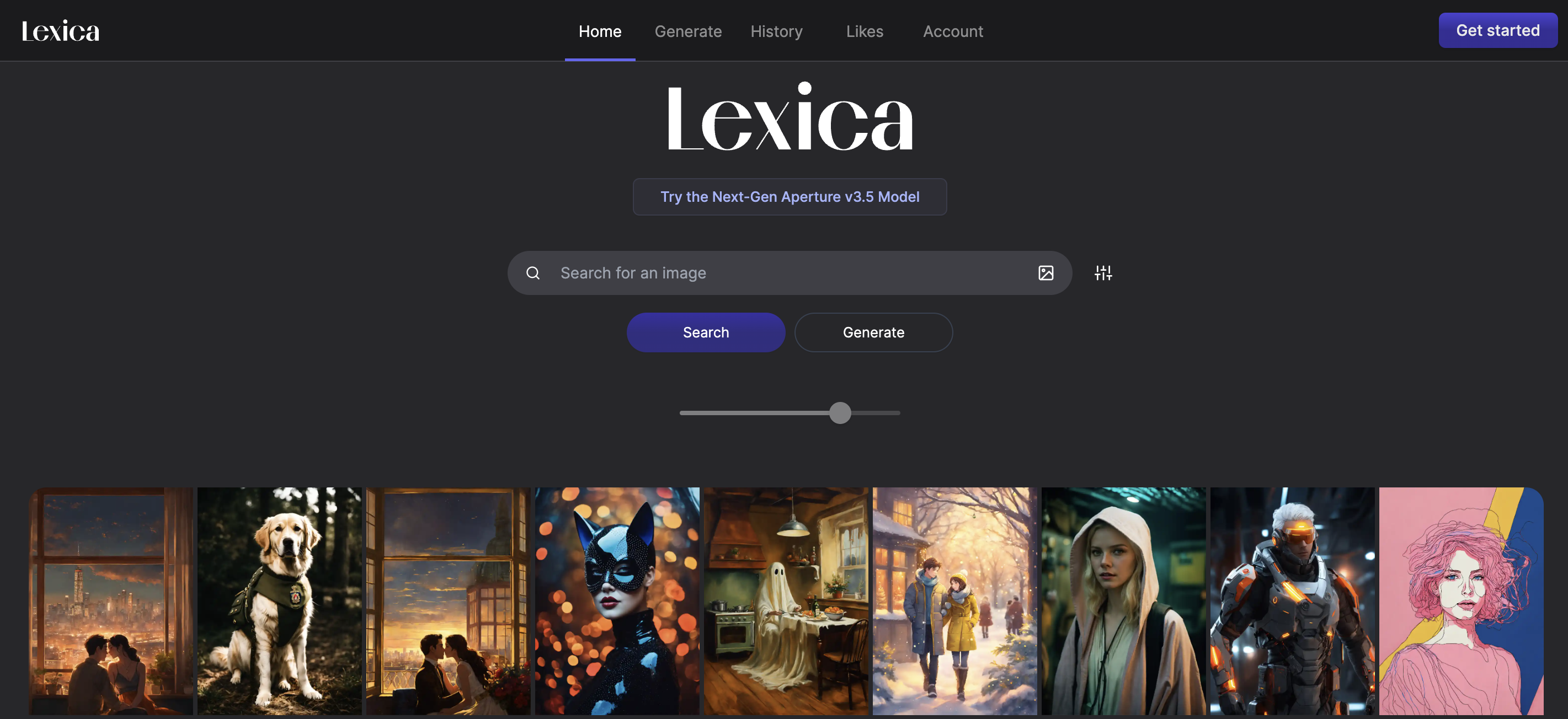
One of the greatest AI image generators I've ever seen is Lexica Art. You can develop marketing content for about anything with it, and it produces some of the most realistic AI photos. I've personally created blog thumbnail photos for my SEO (search engine optimization) clients using this generative AI-powered tool. You can utilize and save many prompts to ensure that every image the tool creates is "on brand" and adheres to your brand rules. Even some brands utilize it for their posts on social media.
You should definitely take a look at this tool if you want to stop using generic stock photos for your blog thumbnails.
3. Surfer SEO (for SEO content writing)
An important objective for any content strategy is to write text that ranks well in search engines. Surfer SEO is a tool for content optimization that makes this happen. As you write, Surfer evaluates and ranks your work based on factors like length, header usage, readability, and keyword density—all of which help material move up the search results.
You must first select your domain, niche, and target market in order to use Surfer SEO. The algorithm will then highlight the top-ranking keywords, offer a suggested content outline layout, and even specify image density for your article to provide you with actionable insights. With Surfer SEO's built-in text editor, you may work directly on it or use copy-paste for rapid examination. You will witness real-time improvements in the SEO as you make edits to your work.
There are connectors available for Jasper, WordPress, Google Docs, and other content marketing solutions. Surfer SEO claims to hit your organic growth metrics for Google search. FedEx, Shopify, Quantas, and Viacom are just a few of the happy customers.
4. Notion AI (for productivity)
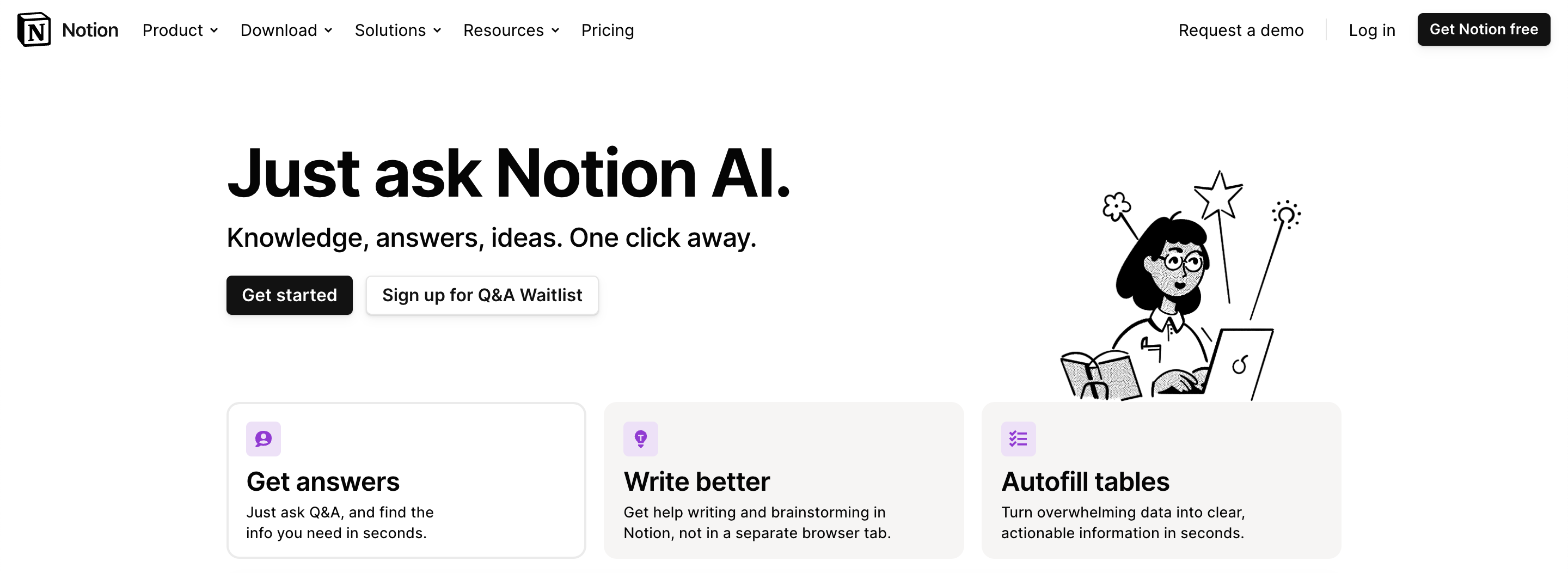
Notion just updated its well-liked productivity platform with the addition of Notion AI, a neat new feature. It makes tasks in Notion simple by utilizing AI. Basically, Notion AI allows you to ask questions in simple English about anything in your Notion workspace, including notes, projects, documents, and wikis, and it will retrieve the appropriate answer for you. The project management software functions akin to having a personal assistant built in.
In addition, the AI may assist you with writing, idea generation, automatically populating tables, and more. So, utilizing Notion eliminates a lot of the tedious manual labor.
Depending on whether you pay annually or monthly, this option costs $8 or $10 per member per month. It may be added to free plans and is compatible with all paid Notion subscriptions.
Notion also prioritizes security and privacy. Data protection rules such as GDPR are complied with and your data is secured. Customers' data is not used by the AI to train itself unless you directly consent to it.
For a limited time, you can test Notion AI for free. The quantity of free responses you receive is based on your workspace membership. It is intended for the AI integration to grow and provide even more features in due course. It feels like a logical update because it integrates nicely with the text editor and capabilities already present in Notion.
In summary, Notion AI simplifies the process of staying organized and utilizing this widely used technology more effectively. Many tiresome activities are handled by the AI, freeing you up to concentrate on doing important job.
5. Content at Scale (for generating SEO blog posts)
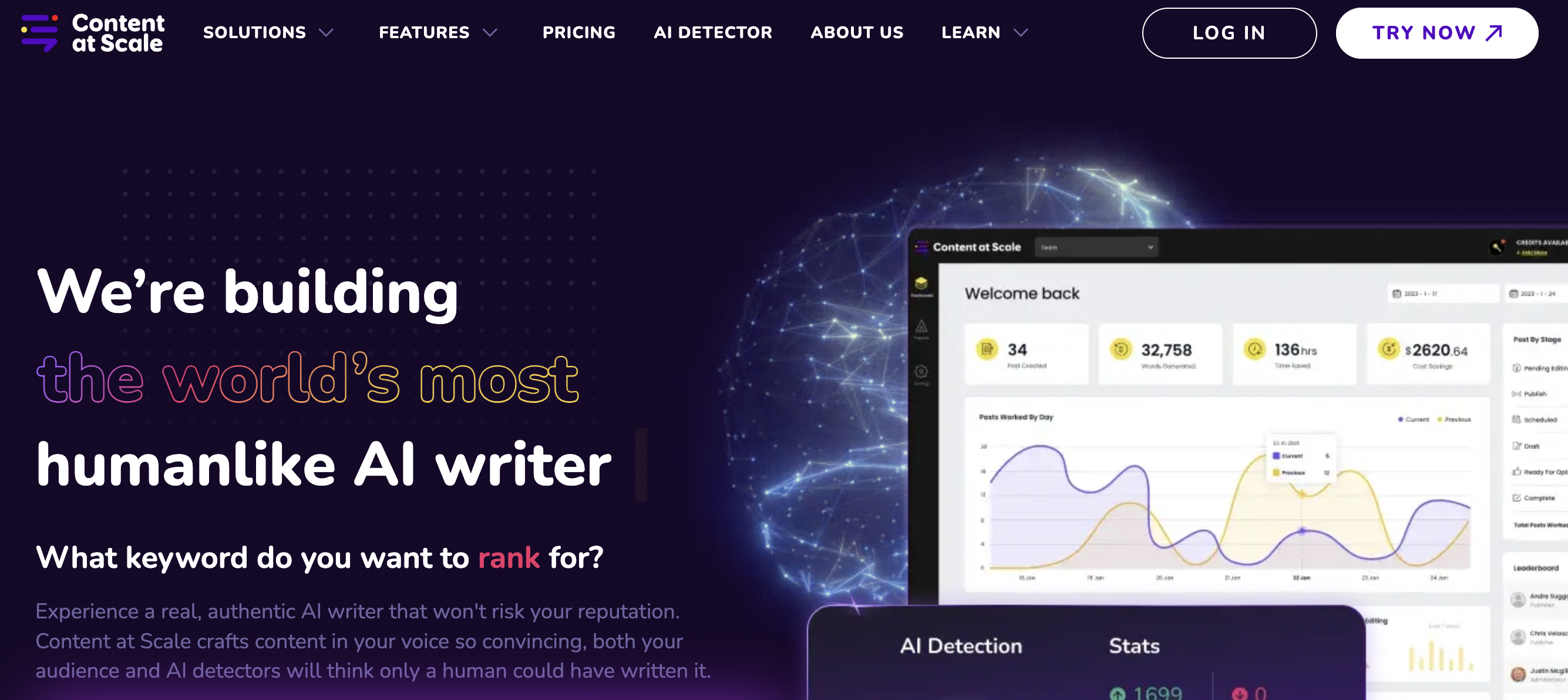
I've been playing around with Content at Scale over the past few months, and I must admit, I'm rather impressed. This is one of the few AI writing tools that passes AI detectors out of all the ones I've used. This tool produces articles that are usually at least 70% human-written when I run them through an AI detector, which is really astounding.
The UI can be a little glitchy, as the platform is still very new. However, in terms of AI content development, the stuff it produces is among the best that I've seen. Although it's not as adaptable as Surfer when it comes to labeling H2 and H3 headings in your articles, the material that it produces is somewhat better than that of Surfer and even Jasper. If you want to create SEO blog content, I highly suggest experimenting with this tool. Of course, the final document should always be reviewed by a real person.
6. Originality AI (for AI content detection)
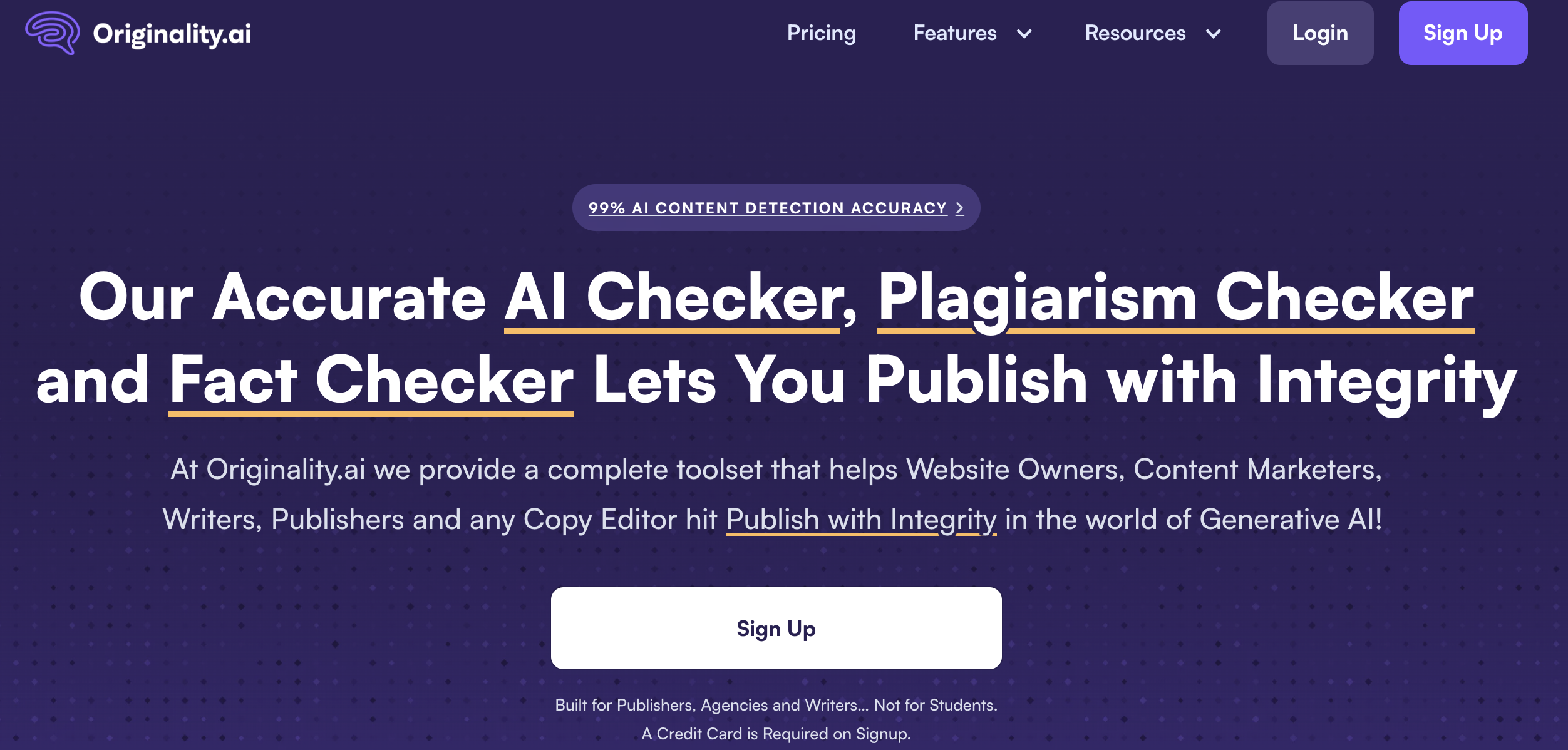
novelty AI is a plagiarism and content detection program. These days, I check that practically all of the content has been produced by a human using this program. I won't, of course, put real human writing through it. However, I usually run content generated by AI using a technology like Content at Scale through this to confirm which areas still require improvement.
If you work with freelance writers and want to make sure they're not utilizing ChatGPT to generate enormous amounts of text, this is also an excellent tool to run your content through. Of course, be cautious when using these detectors. There have been rumors that it misidentifies writing by humans as AI. However, I thought this was one of the better AI content detectors out of all of them.
7. Writer.com (content writing for teams)
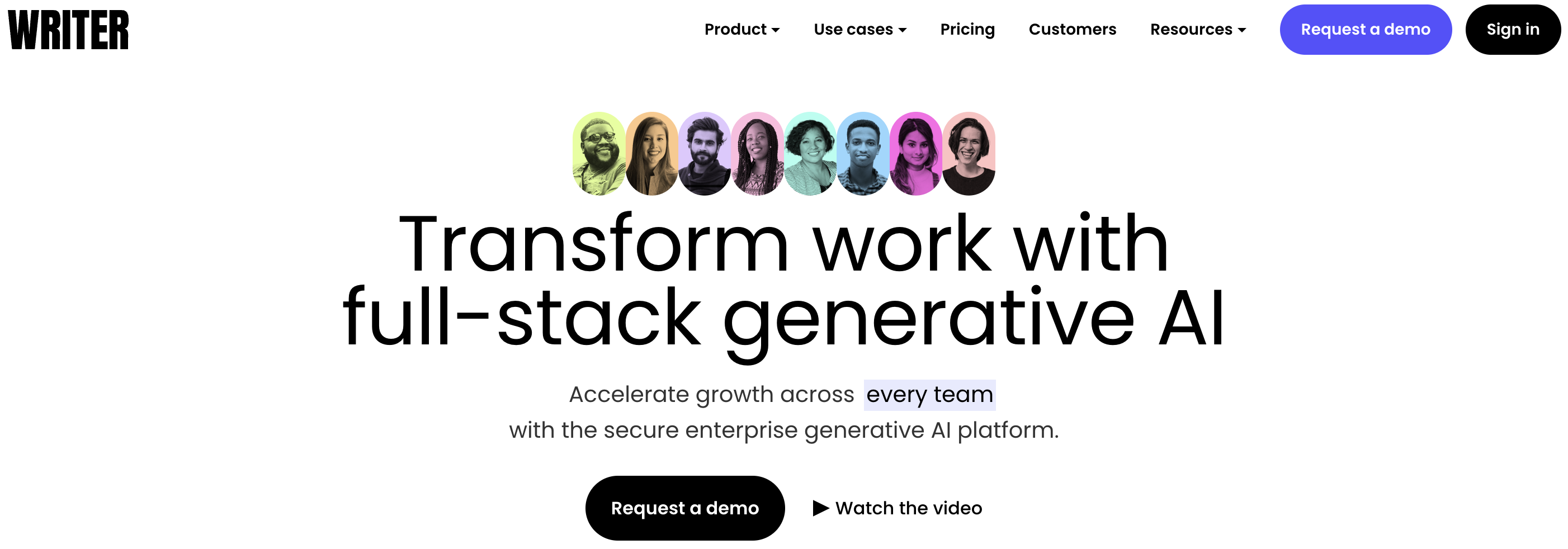
Good value URL, signifying aspirational goals. They present their platform to marketing teams as a writer's assistant. Writer is a collaborative productivity application that amplifies some of the functionality found in a conventional text editor such as Word.
Features include grammar and clarity checks, autocorrect, autocomplete, and frequently used snippets that may be pasted in. A database of acceptable vocabulary is among the intelligence tools available to uphold house style, which is crucial for technology, legal, and financial businesses. Their AI is kind; instead of rewriting entire paragraphs of text, it works in the background and makes recommendations.
This AI writer might give you all the assurance you need that your writing stays precise and professional for all purposes whether you have a hybrid or virtual staff working with little to no in-person supervision. Deloitte, Accenture, Twitter, and Vistaprint are a some of the clients.
8. Undetectable AI (for rewriting AI content)
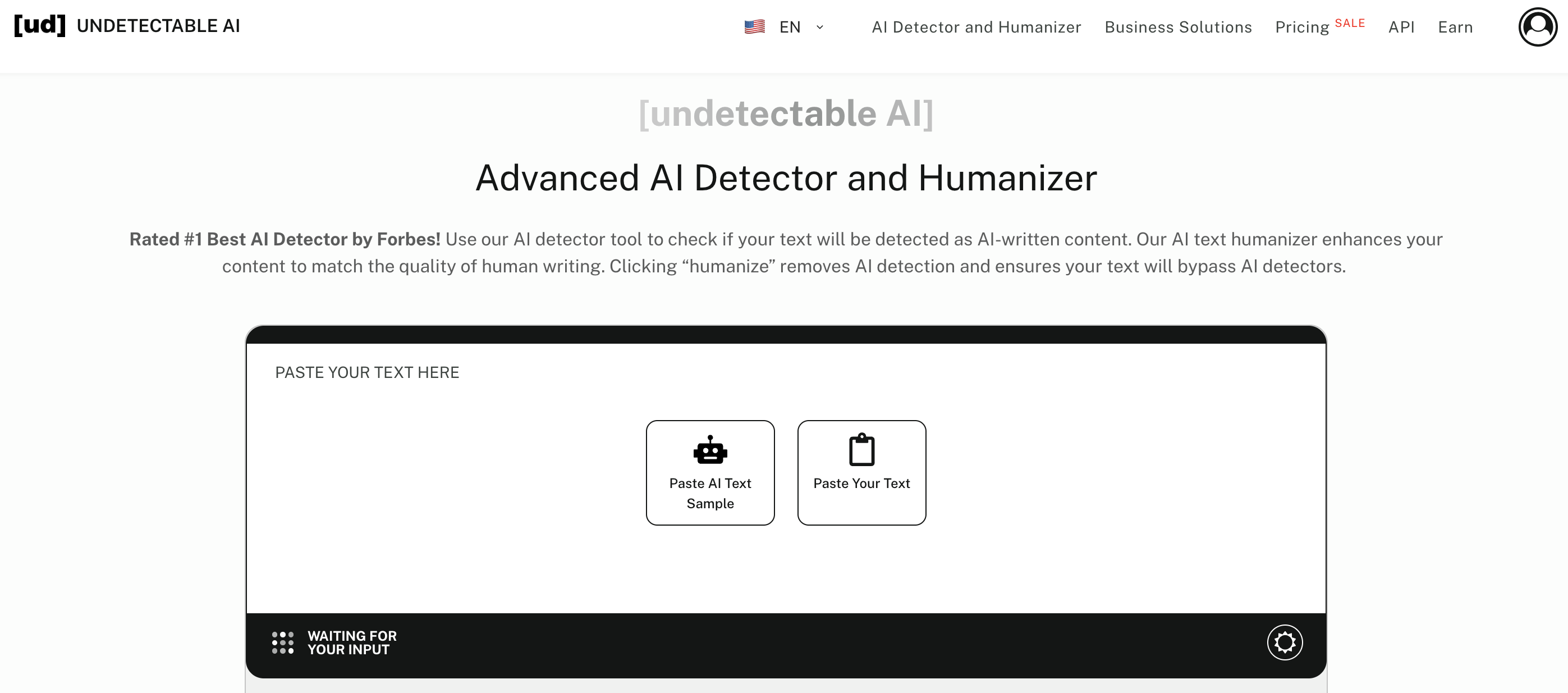
Similar to Originality AI, Undetectable AI is another type of AI content detector. This one is unique since it has the ability to rewrite ChatGPT's AI-generated material to sound more human. To test this, I wrote a paragraph in ChatGPT, rewrote it using Undetectable AI, and then double-checked it using Originality AI. I was surprised to see that it performs fairly well.
Once more, you should use caution while using these AI detectors and rewriters. This program occasionally rewrites sentences that don't quite make sense. Alternatively, it will intentionally make grammatical errors. As a result, you should still review everything it produces to ensure there are no mistakes.
9. FullStory (for digital experiences)
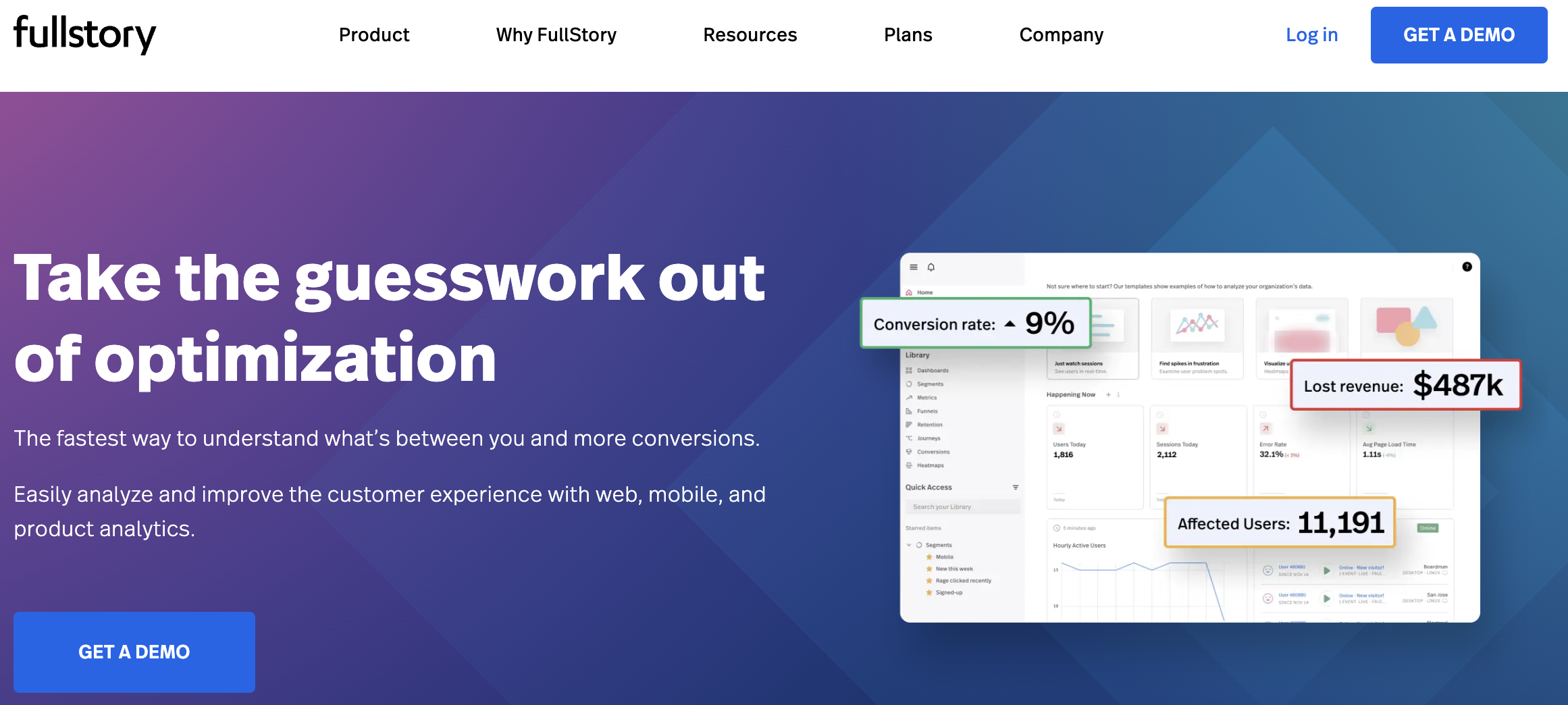
Fullstory refers to a site visitor's entire online experience—from their initial visit to conversion (or discard). They raise an important point: you can learn a great deal from the unexpected, unanticipated actions that customers take.
In order to generate its "story," Fullstory uses artificial intelligence (AI) to monitor each visitor's mouse movement, click, and page visit. Then, to gain understanding, this can be contrasted with the narratives of thousands of other visitors. Fullstory finds chances and mistakes far faster than any human observer could because of the processing power and scalability of AI automation.
Fullstory asserts that consumers will save money, draw in more visitors, and greatly enhance the user experience on their website. Currently, GAP, Zipcar, Icelandair, and Forbes are among their clientele.
10. Zapier (for automating tasks)
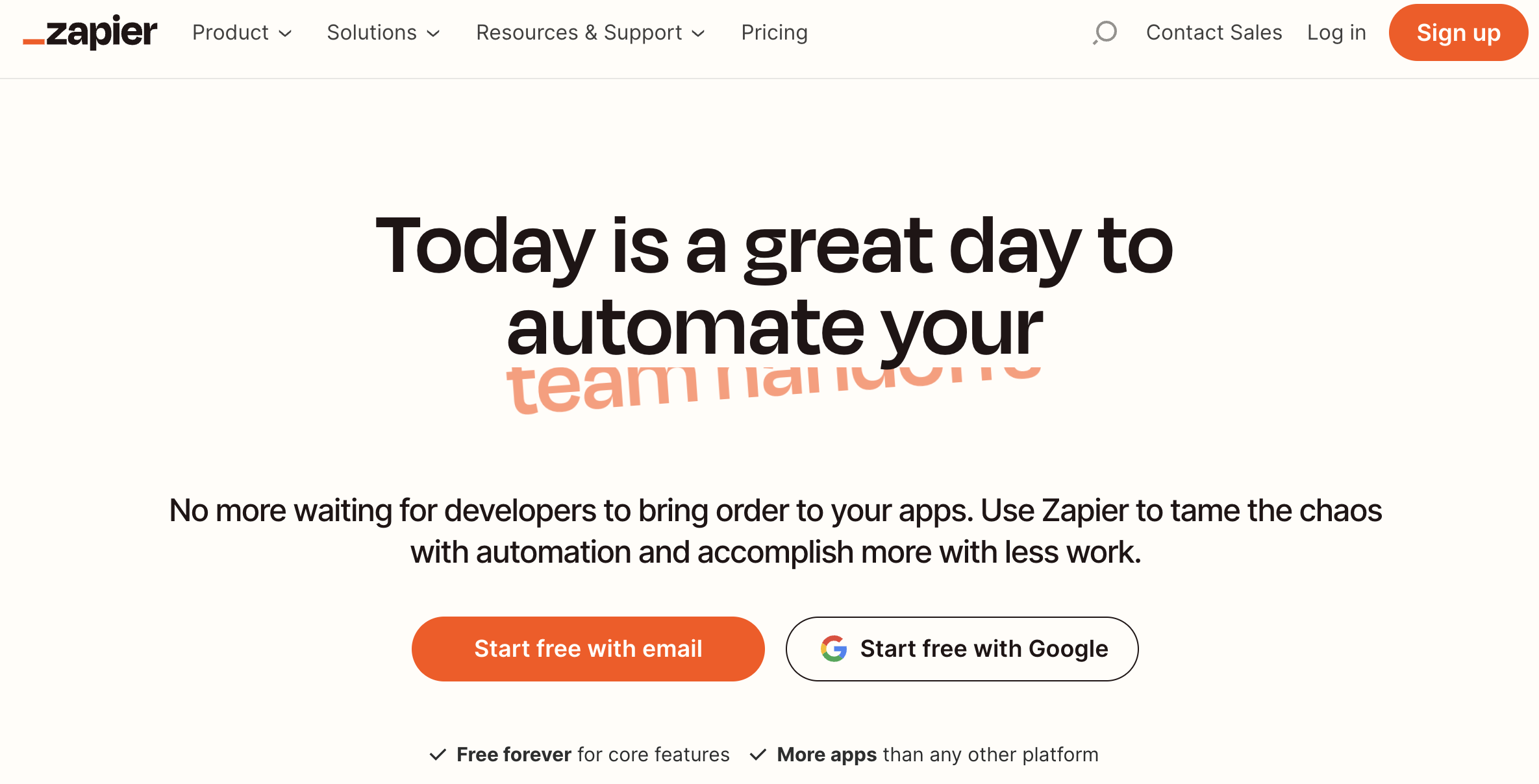
In a sense, Zapier is the Lego of process integration and tech stacks. By using it, you may create linkages and marketing automations between thousands of distinct systems, which can reduce repetitive operations, increase efficiency, save time, and save money. To connect activities in one system to automated operations in one or more other systems, you create customized workflows. Every time, the important information is taken from the appropriate source.
There are templates to make things go more quickly, and these automations can be developed without any code. At the time of writing, Zapier had over 3,000 integrations. It refers to these automations as "zaps." Moreover, you can design branching workflows based on logical standards that you establish.
Behind the scenes, AI is at work reading signals that set off processes at a speed and efficiency that would be impossible for a human team to match. Customers gush about how much time these zaps save them. Along with great assistance, Zapier University offers training, a blog, webinars, and an online community for people who don't know how to code.
11. Hemingway app (for content editing)
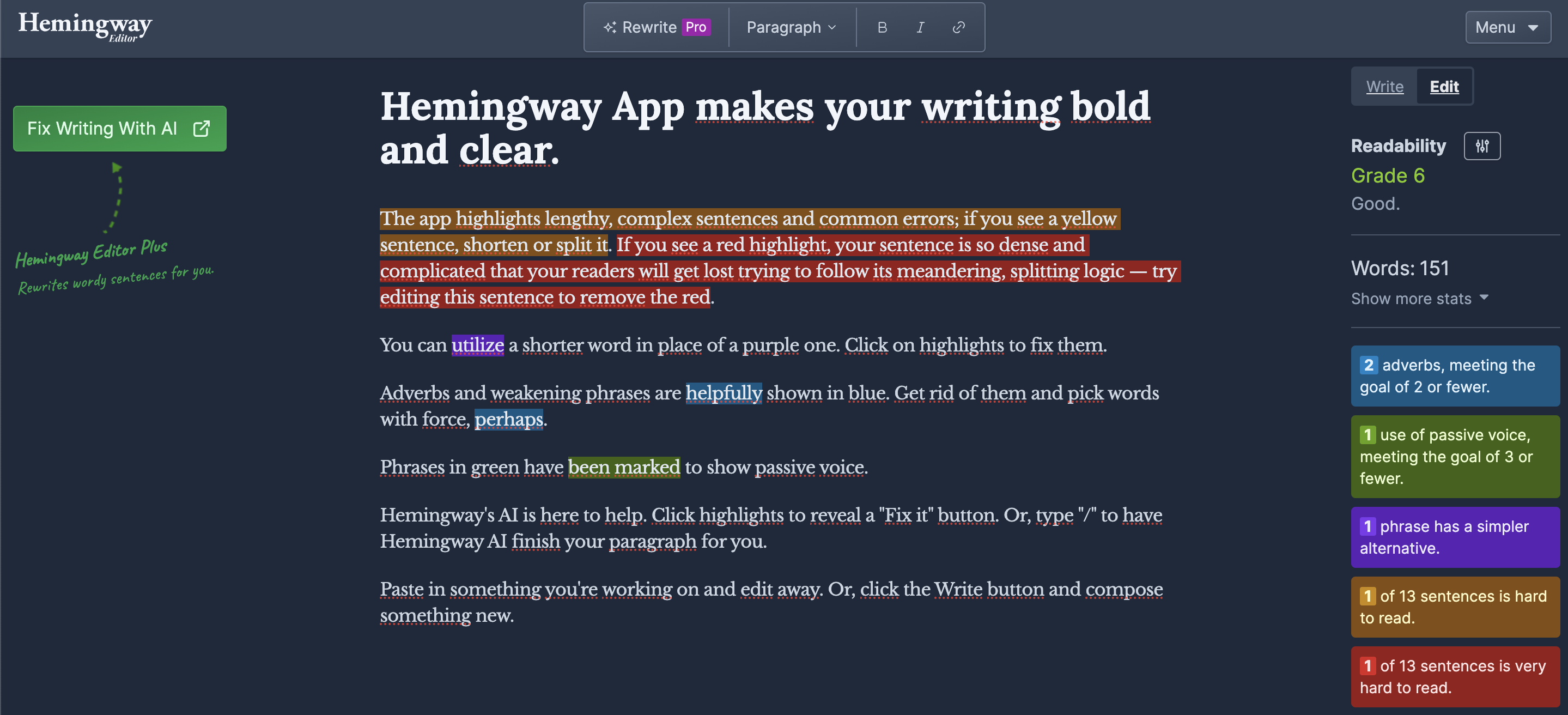
AI can at least assist with editing your material to ensure optimal readability and clarity, even if you only wish to hire human authors to compose it. Hemingway, who takes his name from a writer who was renowned for using few words, emphasizes features of "poor" writing, such as extended sentences, passive voice, and an overabundance of adverbs.
Additionally, Hemingway assigns a readability value based on US academic standing. It is thought that students in grade 9 or below will be the most receptive. Using it couldn't be simpler: just copy and paste your content into the web application, then press return.
Most importantly, it's free! Ben and Adam Long made the app as a tribute to their favorite author. The free version is still really helpful even with the $20 edition's PDF exports, offline usability, and rapid publish features.
However, for some purposes—like opinion pieces, white papers, annual reports, and other writing where readability is less important than personal style—a perfectly optimized Hemingway article could appear overly basic.
12. Chatfuel (for chatbots)
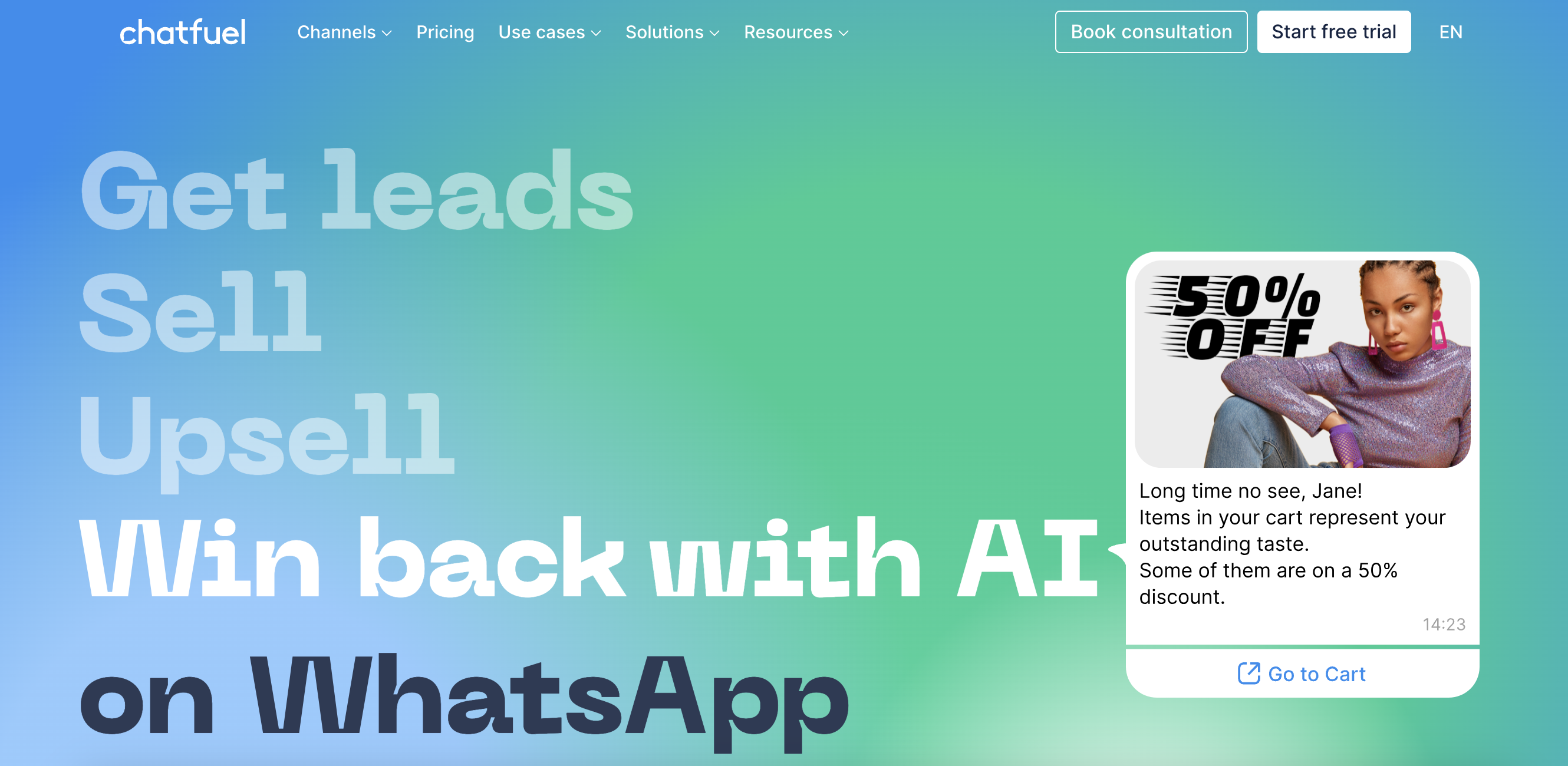
Chatbots, whether they are helpful AI helpers or an annoyance, are here to stay. Naturally, a chatbot's use is dependent on how it is constructed, which is where Chatfuel enters the picture. With the platform's user-friendly drag-and-drop interface, you can design your own custom virtual personality instead of purchasing an off-the-shelf solution.
Chatfuel's bots are very good at comprehending comments, even if they are misspelled or nonsensical. This makes them useful for a variety of purposes, such as replacing a boring FAQ page or guiding potential leads down the funnel by providing discount codes. This AI is performing a great deal of complex language processing, and it is very good at identifying keywords that prompt relevant and useful responses.
Since Meta (previously Facebook) is an official partner, there should be some comfort in knowing that their AI is of the highest caliber.
13. Grammarly (for content editing)
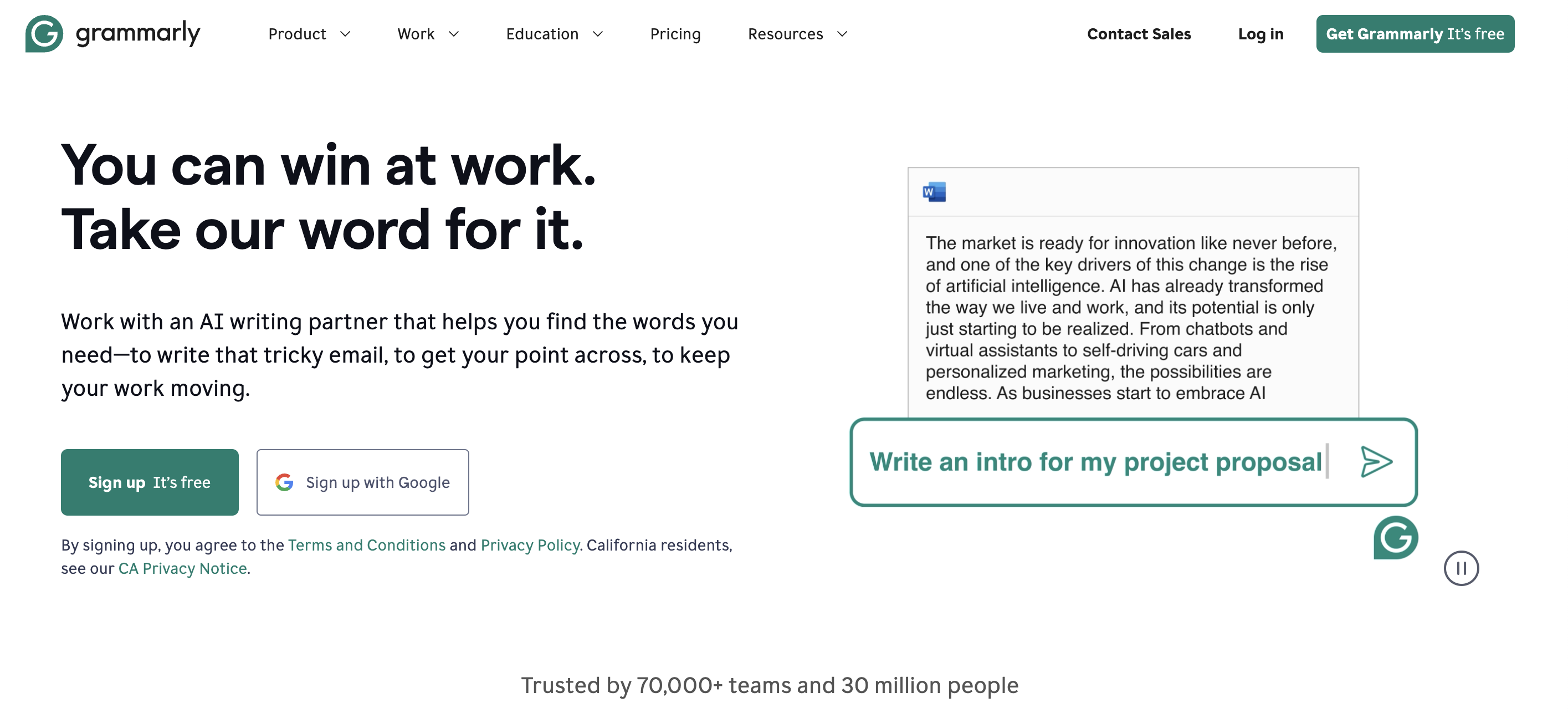
Grammarly will evaluate your content to find areas for improvement, just like Hemingway did. It concentrates on conventional syntax and grammar standards rather than making as many stylistic assumptions as Hemingway did.
One fantastic benefit of Grammarly is that it can be used with a variety of applications, such as Word, Gmail, Facebook, Twitter, and more. You can choose to accept or reject the faults and corrections that its AI highlights. Grammarly is more than just a grammar and punctuation checker; it can also identify repetitive words, stylistic errors, and alternative word choices.
It functions similarly to Hemingway's method of underlining and color-coding mistakes or areas for improvement, and it has been highlighted in prestigious magazines like Forbes, the Wall Street Journal, and the New York Times.
14. Albert.ai (for digital advertising)
It's always going to be hit or miss in advertising, or at least it was until artificial intelligence. Across social media and paid search platforms, such as Facebook, YouTube, Google Ads, Bing, and others, Albert optimizes and personalizes advertising content at scale. Om Shani, the creator, believes in leveraging AI and automation to free up human creatives to create campaigns that resonate with people on a human level. Albert refers to their process as "data-powered creativity."
Albert.ai serves as a testbed where campaigns may be tested and adjusted to capitalize on untapped channel opportunities, overlooked demographics, or untapped markets. It contributes to less wasteful and more appropriate advertising strategies.
Telenor, Harley Davidson, and Crabtree & Evelyn are some of Albert's adopters. The latter saw a staggering 2,930% rise in leads per month and a five-fold increase in site traffic.
15. Headlime (for landing pages)
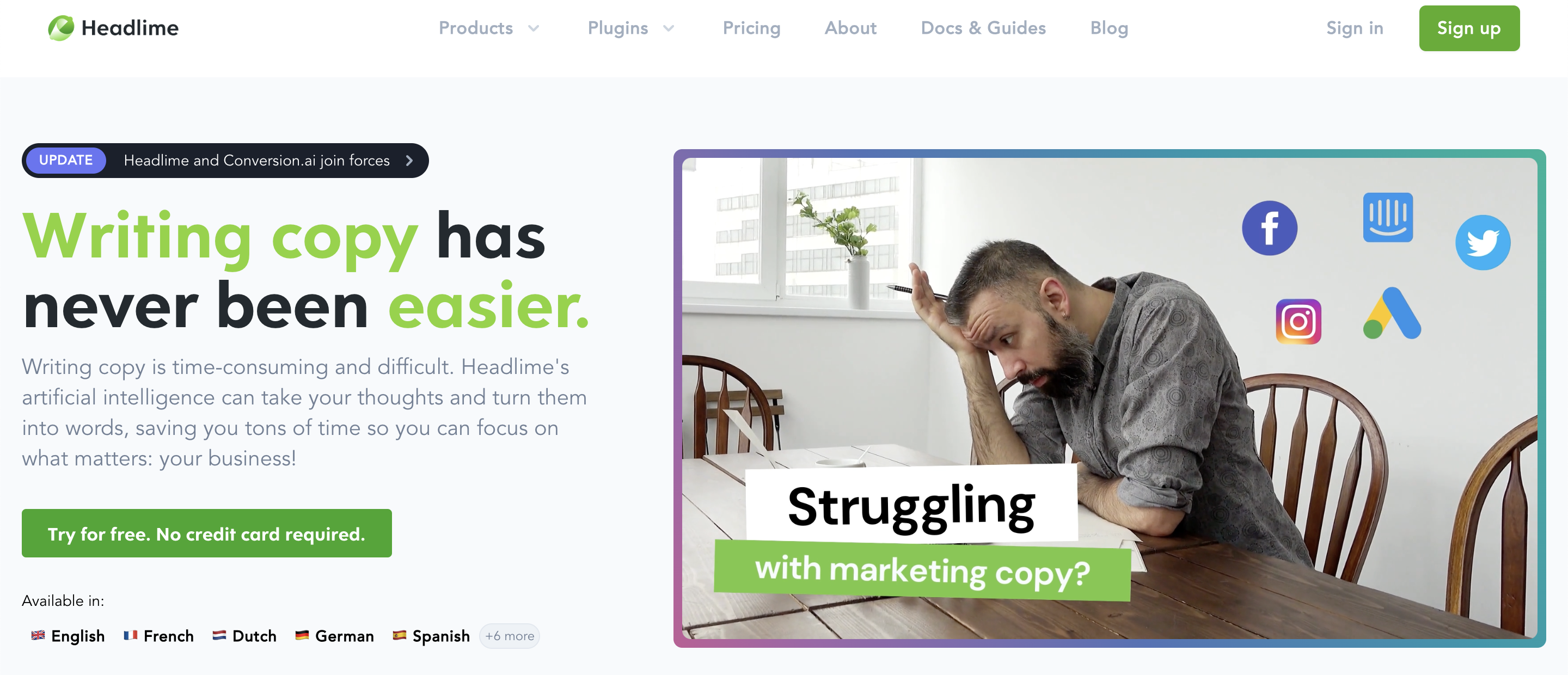
As the online equivalent of a storefront, landing page copy is essential. Headlime is an AI-driven content creation platform created to elevate landing page design.
With the use of machine learning and the deep learning capabilities of OpenAI's GPT-3, Headlime can anticipate and finish sentences that you enter, possibly saving a lot of time. It can write material in a variety of languages and tones, optimize word count, and provide high-performing subject lines.
It can produce blog content just like Jasper, but it also has a basic landing page builder incorporated into it, saving you from having to copy and paste all the time. Most significantly, it never loses sight of the goal at hand, which is to maximize conversions and time spent on the website. With more than 1,700 copy templates available in 11 languages, you could quickly launch a global landing page.
16. Userbot.ai (conversation management)
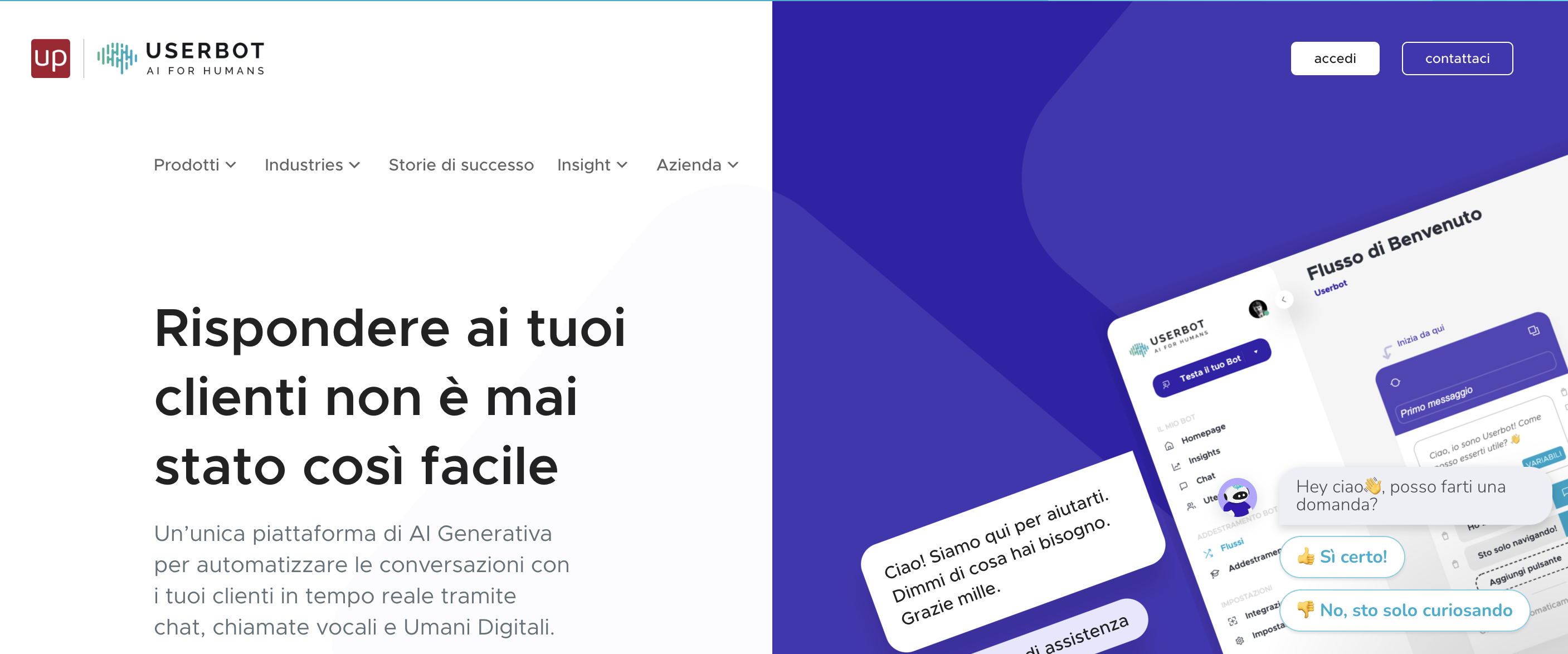
Although Userbot initially appears to be just another chatbot, it is far more intelligent than that. Userbot transfers control of a customer's inquiry to a human operator when it is unable to understand it, but it keeps an eye on the exchange and gains insight from it. The userbot then adds the new user query to its repertory and applies what it has learned to get better.
Therefore, Userbot ought to becoming increasingly intuitive and efficient over time, albeit at first you might still need to respond to human operators quite a bit. I tried asking it, "Who are your top clients?" and it didn't give me a meaningful answer. They are Aboca, SSG, and Vivactis Group, for the record.
The system offers helpful customer data that you can use to track how well your customer service or sales staff is performing (it also connects with several prominent CRM solutions).
17. Browse AI (for scarping web pages)
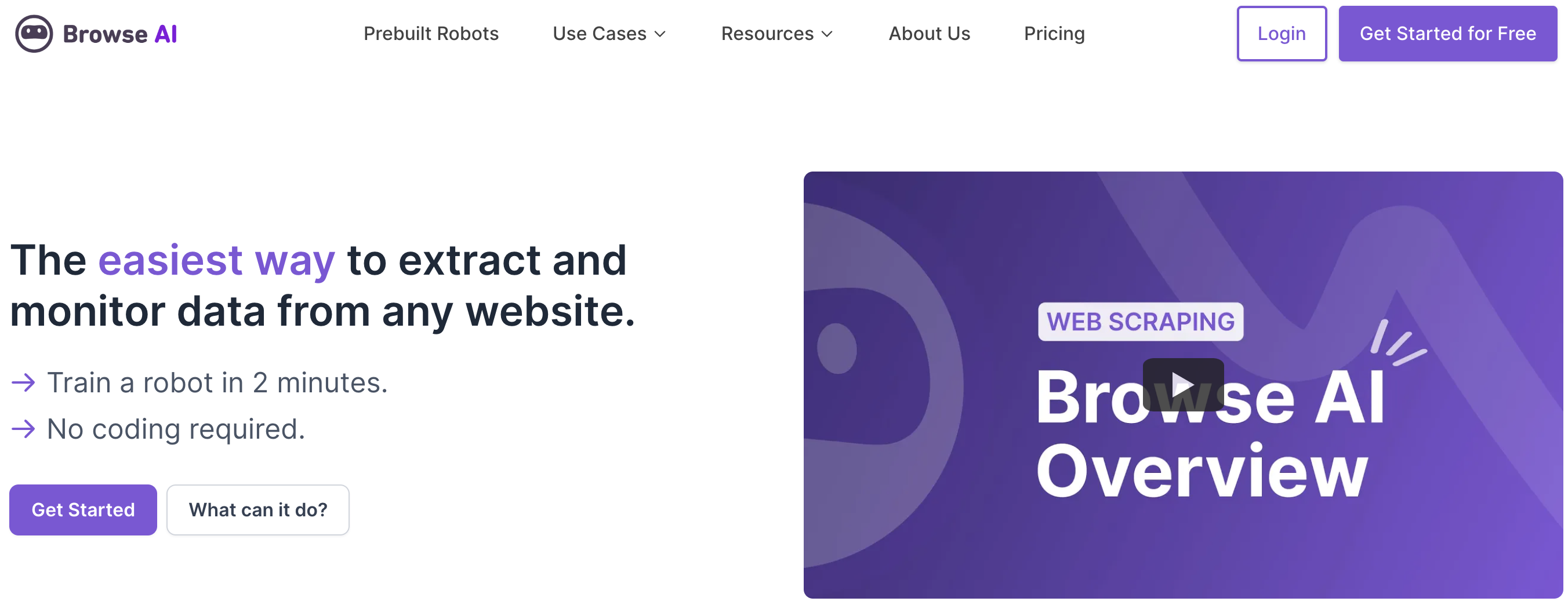
Digital marketers may equip themselves with one of the most potent weapons in their arsenal: competitive intelligence (CI). It enables you to evaluate rival brands and identify recent developments in reviews, pricing schemes, trends, and product introductions. Data scraping, or the use of algorithms (sometimes known as "spiders" or "bots") to scour rival websites and retrieve valuable information, is required for continuous integration (CI) at scale.
With Browse AI, you can easily teach a bot to find data for you, instantly populating a spreadsheet with all the information you require. You could configure it to search for one- or two-star evaluations of competing items to identify areas for potential product enhancements, or to see what comparable products are already selling for on e-commerce sites.
The developers of Browse claim that its AI can imitate human behavior to get beyond Captcha and other anti-bot security measures. More than 2500 businesses, including Adobe, Amazon, Salesforce, and HubSpot, use the software.
18. Algolia (for search and recommendation APIs)
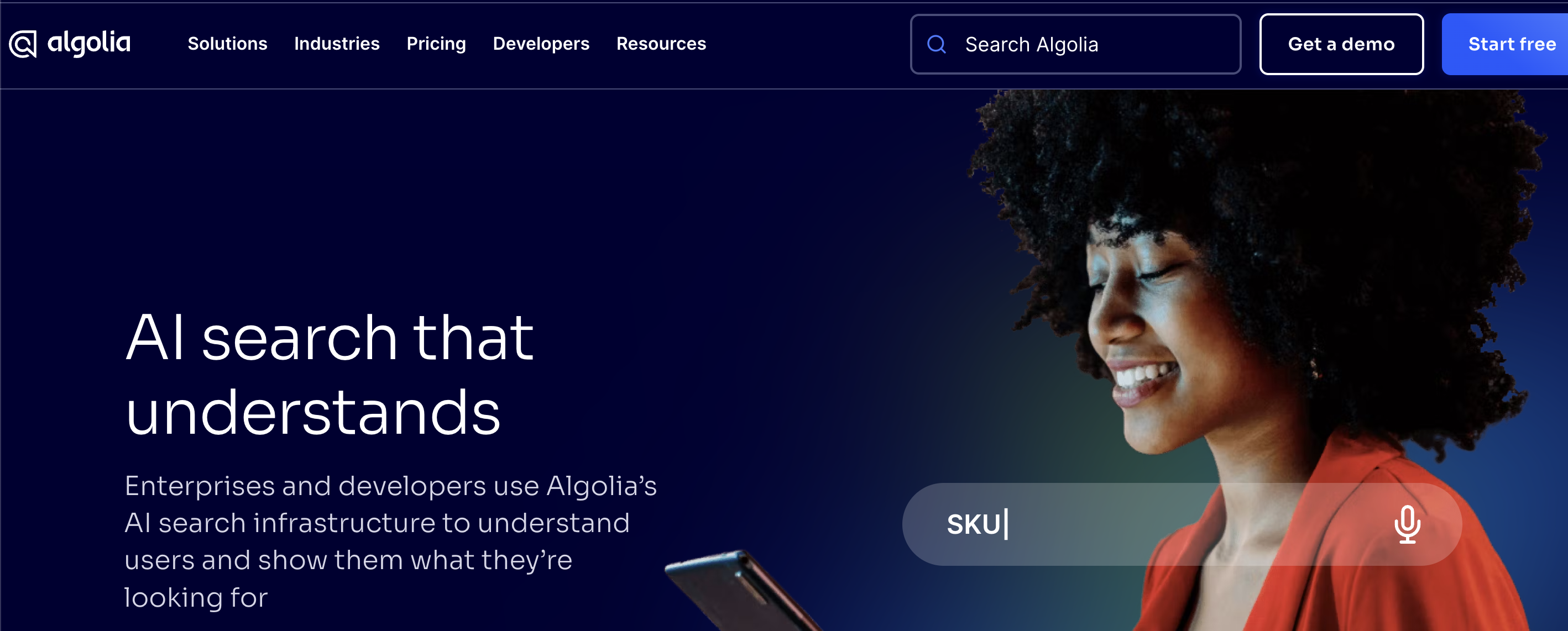
Either way, search boxes can be either useful or quite annoying. Instead of inserting a "powered by Google" section, how about building your own custom search engine?
Algolia makes this possible, which is why it's so well-liked by e-commerce businesses and entertainment organizations with huge inventory. Customers are more likely to make a purchase from you if they don't have to spend as much time aimlessly perusing your catalog.
Make your own search filter so that clients can quickly and easily find what they're looking for. Many other sales sites, including those of Staples, Gymshark, NBCUniversal, Decathlon, and Lacoste, already use Algolia.
19. PhotoRoom (for removing image backgrounds)
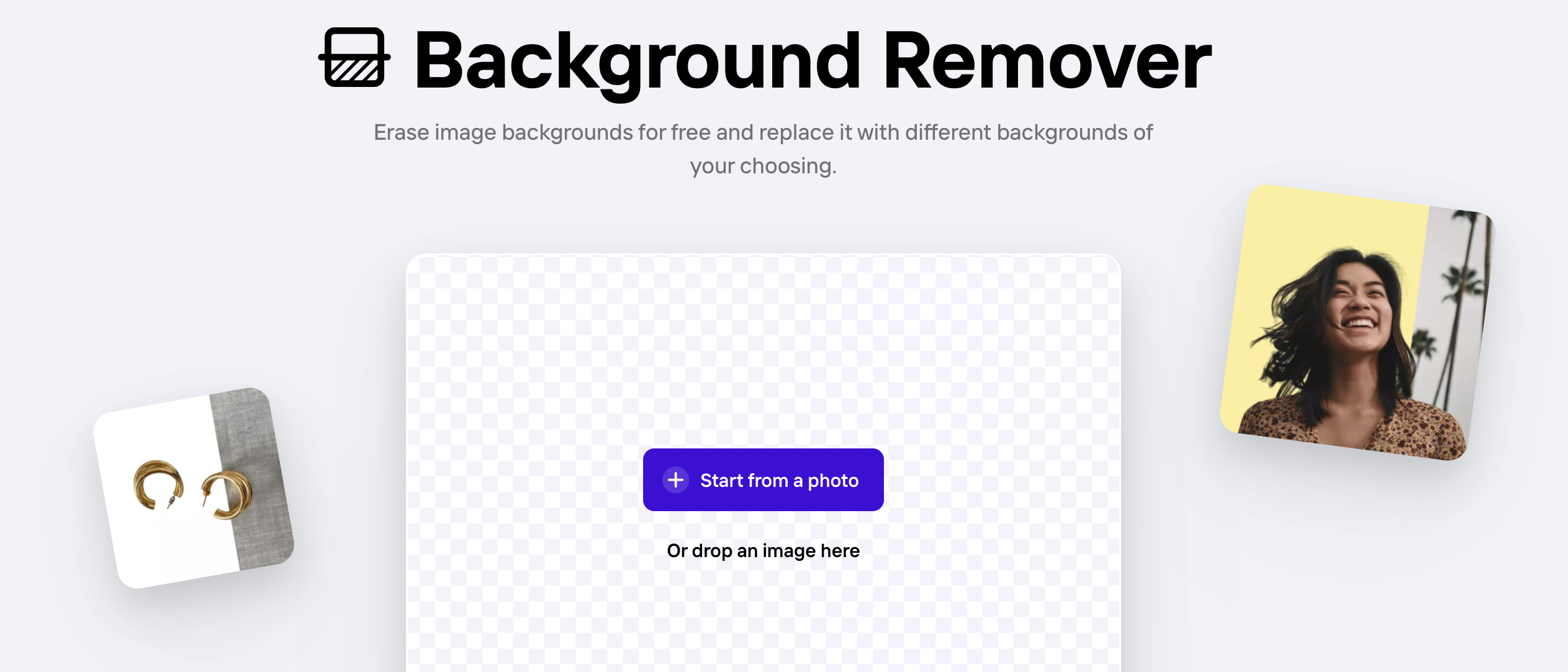
This is a great (and free) specialized tool that highlights the human subject on a transparent background that you can use in other visuals by selecting removing the background from any photo. I gave it a try using a few of my own pictures, and it was really effective.
This design tool distinguishes the subject of a portrait from the background using artificial intelligence (AI) and machine learning. With PhotoRoom, defining an image's outline takes seconds instead of the 10 minutes it might have took a designer in the past. You have the option to add any hue background you like.
Anyone who has to create an avatar for usage in various places or a "meet the team" page will find it to be an incredible blessing. There is a mobile app and a premium batch version available.
20. Reply.io's AI Sales Email Assistant (for email replies)
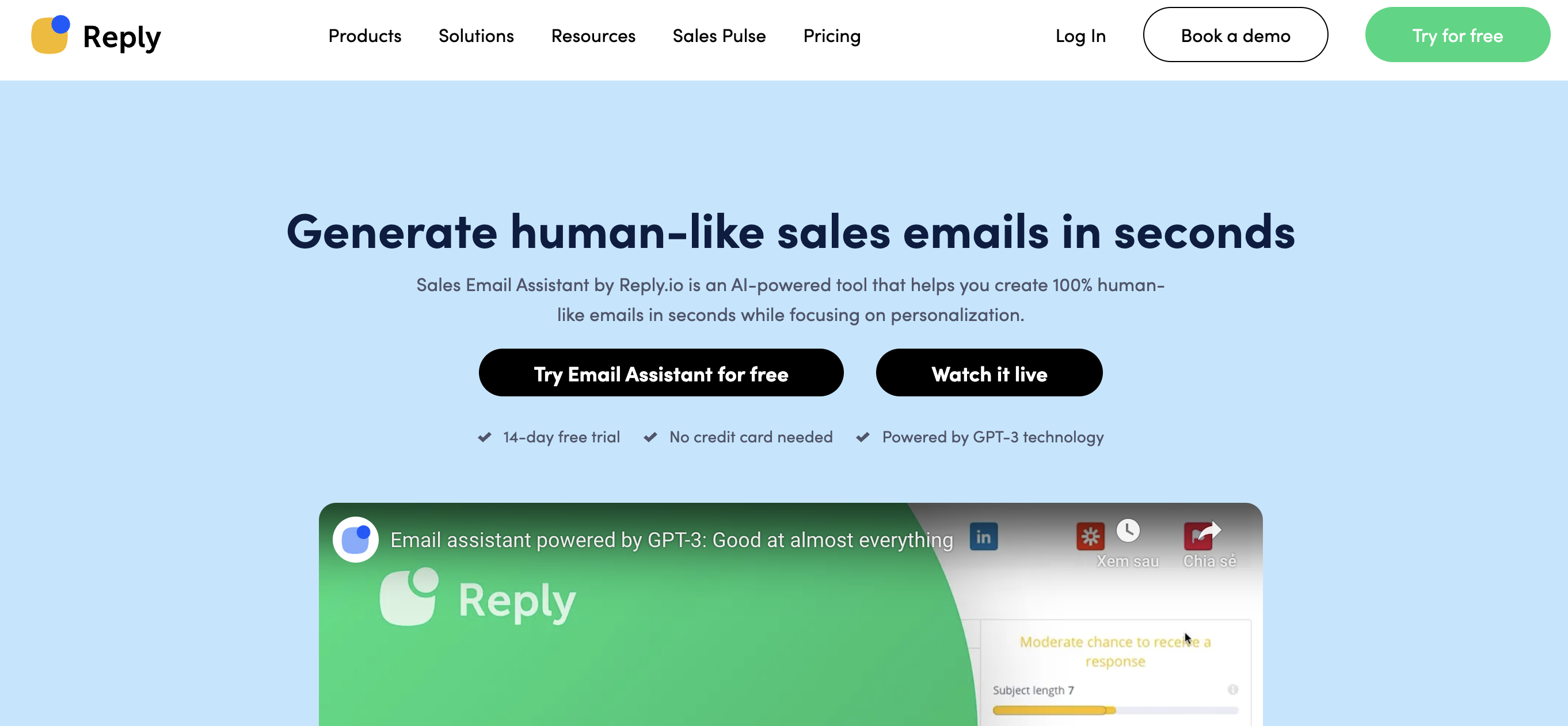
Another repetitive and labor-intensive marketing chore that may easily become tedious is creating regular email responses. The AI Sales Email Assistant from Reply.io seeks to eliminate most of that tedious work. However, despite marketing itself as a “sales engagement platform,” it also has a wide range of applications.
Even while email marketing efforts have a pitiful 1.22% conversion rate, when you scale them, that can translate into a ton of potential leads. Utilizing this fully automated strategy to its maximum potential requires using an AI-powered email marketing solution like Reply.io.
Create drip campaigns of cold emails using various channels, and Reply will take care of the rest by using artificial intelligence (AI) to score responses and assist find leads with potential. Numerous CRM connections and predictive analytics solutions are available to monitor the advancement of your campaigns.
21. Brand24 (for media monitoring)
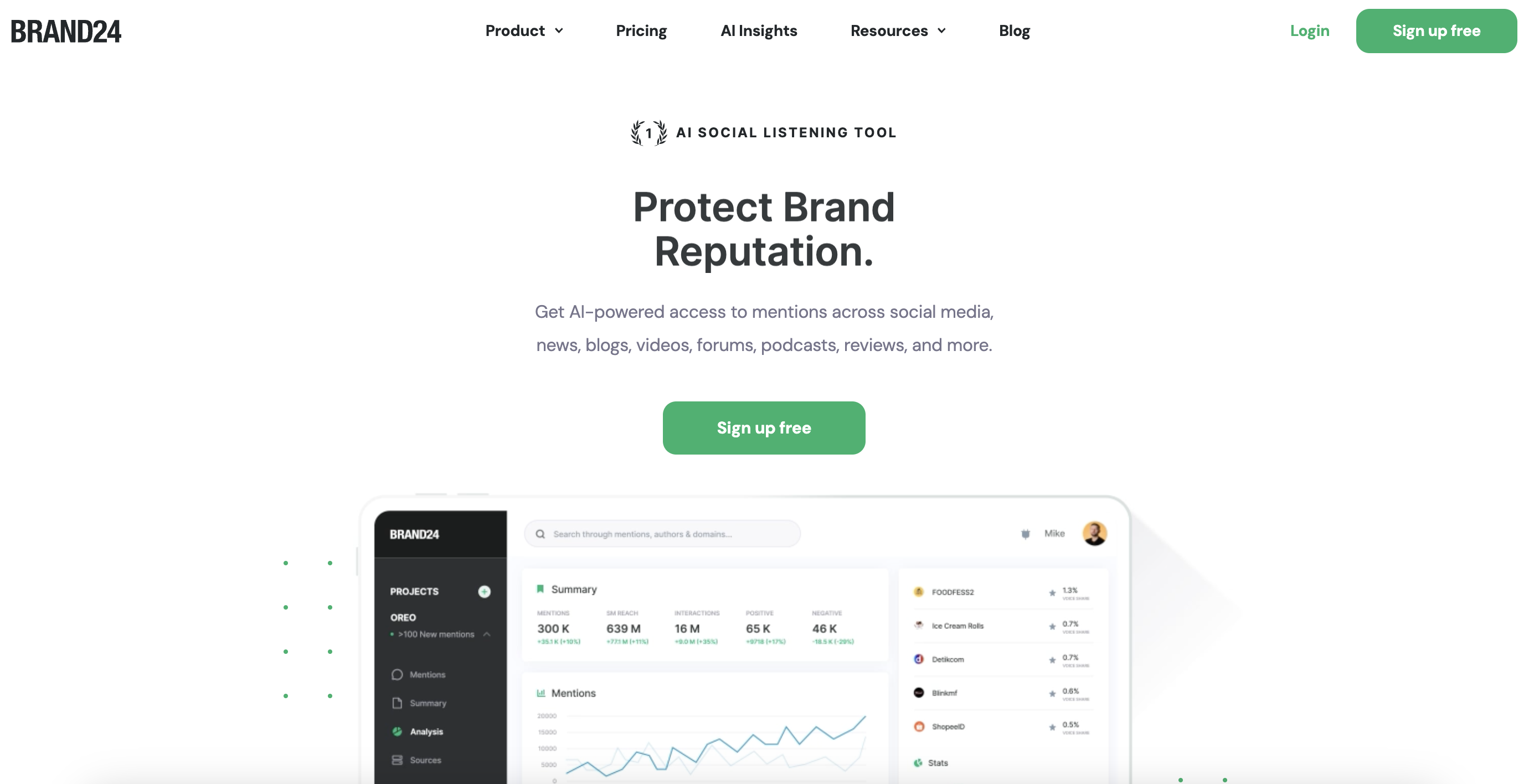
Where should you begin if you want to see how your brand is mentioned online? Brand24 searches social media, blogs, forums, video, news sites, and other places for mentions. After that, sentiment analysis is used to determine conversational subjects and the users' and reviewers' underlying feelings.
You can handle customer support concerns and criticism promptly, which enhances customer retention and may help you identify product and service defects before they become serious problems. Brand24 will filter out irrelevant content and highlight negative remarks and positive reviews far more effectively than a Google keyword search.
In addition to excellent customer care, which includes blogs and masterclasses to hone your marketing strategy and customer service abilities, there's a fantastic feature for identifying hashtag trends. Intel, Stanford University, and Uber are among the clients.
22. Influencity (for influencer marketing)
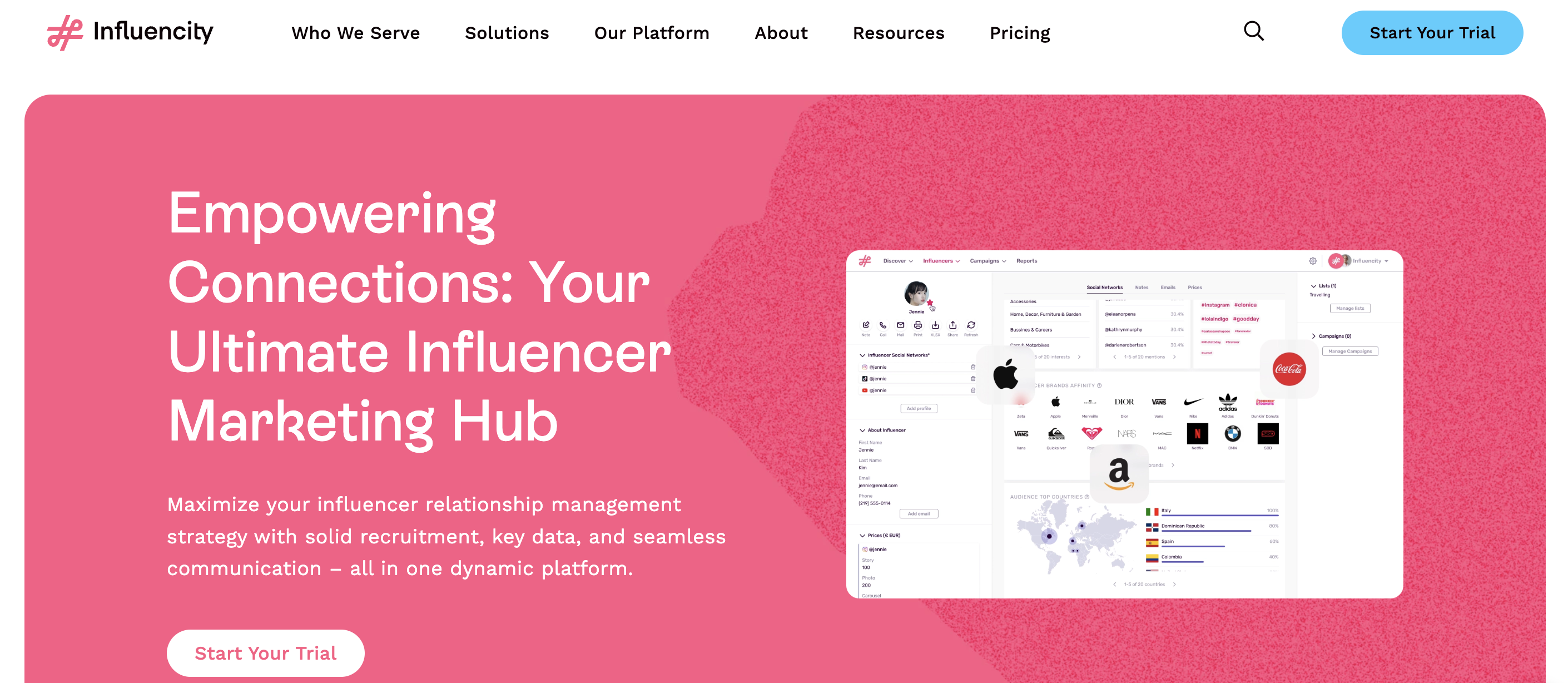
Influencer marketing on social media has been a huge trend in recent years, and it doesn't seem to be going away. Brands, particularly those targeting specialized or younger populations, find great success with social media influencers for endorsements, product reviews, hauls, sponsorship, and traditional advertising.
Known for being the "most complete influencer marketing platform available," Influencity is utilized by major brands including Samsung, Kellogg's, and WPP. It assists marketers in identifying and reaching out to influencers, working together on campaigns, and monitoring their success.
Every significant social media network is included. This is an excellent agency solution because it has a ton of stats and can work at scale across several brands.
Marketing driven by AI is here to stay.
We are obviously only at the beginning of this AI technology revolution, given the myriad advantages that AI algorithms may offer, like scalability, reach, efficiency, cost savings, decision making, analytic capability, better customer experience, and more. With more innovative tools at their disposal than ever before, marketers can now compete with the biggest names in the world for global success alongside smaller startups.
Be open-minded, give the freemium versions of many of the aforementioned products a try, and they can end up being your best buddy in the future for your marketing endeavors.
