



In 2025, product managers are no longer limited to writing feature documents or coordinating between teams. They are expected to visualize, prototype, and validate ideas quickly. Traditional design cycles are often too slow, and development resources are too valuable to waste on unproven concepts.
This is where AI prototyping comes in. It allows product teams to create high-fidelity, interactive prototypes in minutes using artificial intelligence. No advanced design skills or technical setup are required.
In this post, we explore how AI prototyping tools are reshaping product workflows, the key skills product managers need to stay ahead, and how platforms like Alloy App are leading this transformation.
Why AI Prototyping Is a Game-Changer for Product Managers
The expectations for product managers have changed dramatically. In today’s fast-paced environment, product teams must deliver value quickly, reduce waste, and align stakeholders early in the process. AI prototyping makes this possible in ways that traditional tools cannot.
Speed Over Perfection
AI prototyping tools allow product managers to bring ideas to life in minutes. Instead of waiting for a designer or developer, you can instantly create visual concepts that feel close to the real product. This saves time and keeps projects moving forward.
Better Stakeholder Alignment
Static wireframes and written documents often cause confusion. AI-powered prototypes are interactive and visually accurate, helping stakeholders understand your vision clearly. This reduces miscommunication and improves decision-making.
Fewer Bottlenecks in Early Development
With AI tools, product managers can test ideas without waiting on other teams. This independence helps avoid delays and allows faster iteration. Teams can validate concepts earlier, before investing in full development.
More Opportunities for User Feedback
By creating prototypes that look and feel real, you can gather more useful feedback from users. This leads to better product decisions and increases your chances of building something people truly need.
Spotlight: Alloy App – AI Prototyping Built for Real Products
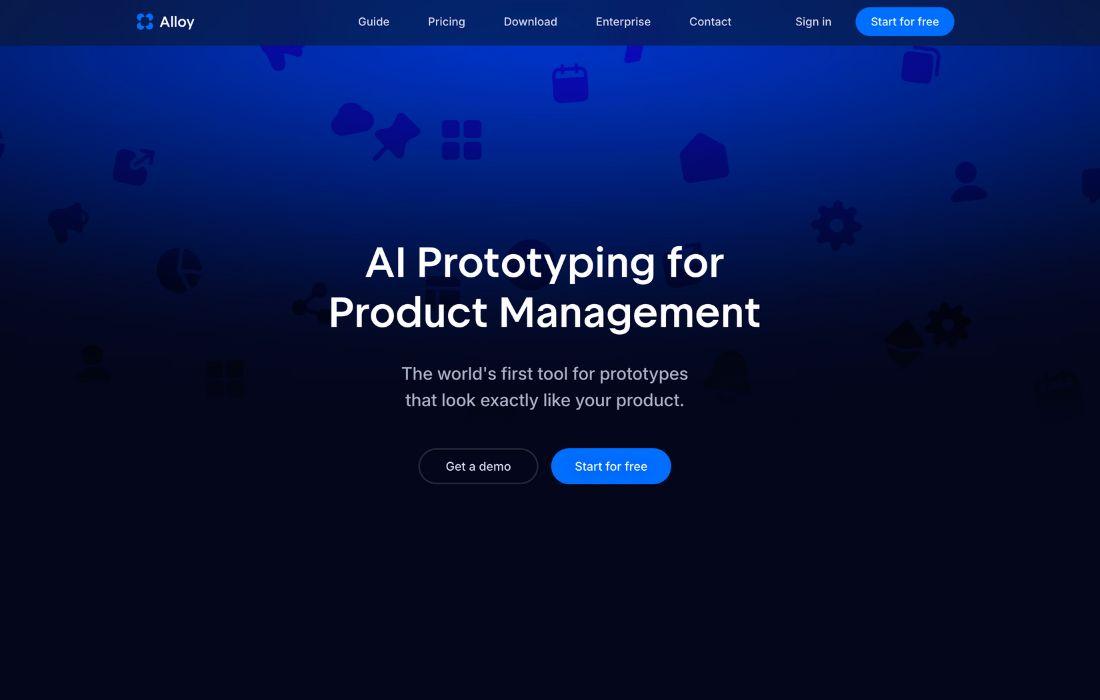
Among the growing list of AI prototyping tools, Alloy App stands out by offering something unique. While most tools ask you to start with templates or design files, Alloy lets you build prototypes using the actual interface of your product. For busy product managers, this means less setup and more meaningful output.
What is Alloy App?
Alloy App is an AI-powered prototyping platform that helps you capture your existing web product, then generate new screens or features based on your current UI. It blends real product visuals with AI creativity, allowing you to make realistic changes without design files or developer input.
Key Benefits for Product Managers
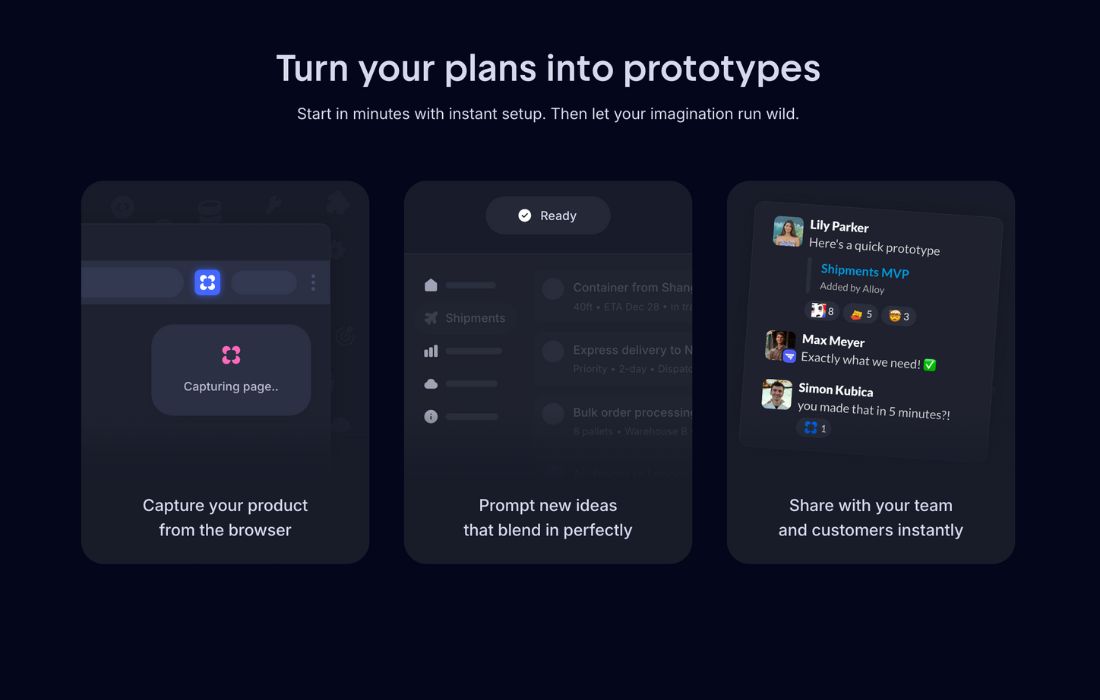
- Capture What Already Exists
- Alloy comes with a browser extension that lets you capture live product pages instantly. This forms the base for your prototype, so you don’t need to recreate screens or components manually.
- Prompt Your Way to a Prototype
- You can describe changes or new features in natural language. Alloy uses AI to generate these updates while keeping your product’s design consistent.
- No Need for Figma or Code
- Alloy works without requiring design exports or development help. You stay focused on testing ideas, not on preparing files or waiting for handoff.
- Faster Feedback, Better Alignment
- Prototypes are fully interactive and look like your real product. Share them with users or stakeholders to gather feedback that actually reflects the final experience.
- Learns as You Use It
- The more you capture, the smarter Alloy gets. It starts to understand your product’s patterns, layouts, and styling rules—making future prototypes even faster to build.
When to Use Alloy App
Alloy is especially useful when you want to:
- Prototype a new flow without involving design
- Validate a feature idea before development begins
- Present polished concepts to stakeholders
- Reuse the look and feel of your live product in every prototype
In short, Alloy App gives product managers the power to prototype like designers, without needing a design background. It brings speed, clarity, and visual accuracy to the product development process.
How Alloy App Compares to Other AI Prototyping Tools
There are several AI prototyping tools available in 2025. Each brings different strengths, depending on your team’s needs and the type of product you’re building. Here is a simple comparison of the most popular options, and how Alloy App stands out.
| Tool Name | Best For | Key Features | What Makes It Unique |
| Alloy App | Realistic prototypes for web products | Browser capture, AI prompts, no design files | Uses your actual product interface |
| Uizard | Fast wireframes and mockups | Text to wireframe, templates, AI suggestions | Great for early-stage visual drafts |
| Framer AI | Interactive websites and landing pages | Visual editor, AI layout generation | Focus on web content and animations |
| Relume | Quick marketing page generation | AI copywriting, layout creation | Best for solo founders and marketers |
| Builder.io AI | Front-end UI with code | Drag-and-drop builder with developer support | Aimed at developers and tech teams |
Why Alloy App Stands Out
Most tools generate new designs from prompts or templates. Alloy App does something different. It lets you work directly with your own product’s UI, turning existing pages into editable, brand-consistent prototypes. This saves time and keeps your team aligned with the current user experience.
It’s the most practical tool for product managers working on real, evolving products—not just one-off marketing pages or concept sketches.
What Skills Product Managers Need for AI Prototyping
As AI tools become standard in product workflows, product managers will need to develop a few key skills to stay ahead. These are not technical skills in the traditional sense, but rather modern capabilities that help you get the most from tools like Alloy App and others in the AI prototyping space.

1. Clear Prompt Writing
AI tools depend on strong input. If you can describe user flows, interface behavior, or layout needs clearly, you will get better and more accurate results. Think of prompt writing as a new product management superpower.
2. Visual Communication
You do not need to be a designer, but you should understand the basics of good interface design. This includes spacing, hierarchy, clarity, and accessibility. It helps you evaluate what the AI produces and tweak it if needed.
3. Rapid Iteration Mindset
AI prototyping is all about speed. You can test multiple ideas in a single afternoon. That means you should be comfortable making quick decisions, reviewing results, and moving forward without over-polishing every version.
4. Stakeholder Storytelling
High-fidelity prototypes are powerful tools for getting buy-in. To make the most of them, sharpen your ability to present ideas clearly. Show the user journey, explain the problem being solved, and use your prototype as visual proof.
5. Tool Fluency
Knowing which tools to use and when is essential. Alloy App is perfect for product-based prototyping. Uizard might be useful in brainstorming sessions. Framer may serve well for marketing. Get comfortable switching tools based on context.

Final Thoughts: The Future of Prototyping Is AI-Powered
The days of waiting on design files or lengthy handoffs are behind us. In 2025 and beyond, AI prototyping is redefining what product managers can do. You no longer need to be a designer to create high-fidelity, user-ready prototypes. With the right tools, you can turn your product vision into something real in minutes.
Alloy App is a perfect example of this shift. It allows you to work directly with your live product interface, generate new flows using simple prompts, and share polished, clickable prototypes without needing design support or code.
If you are a product manager who wants to move faster, align better with your team, and reduce wasted time in early-stage development, AI prototyping is no longer optional—it is essential.
Now is the time to upgrade your workflow, sharpen your skills, and explore tools like Alloy App that make modern product management smarter and more efficient.
Want to Go Further?
Learn more about AI-powered tools for product teams at AIJourney Academy.
