





Introduction: The AI Revolution and Your Online Income Potential
AI is changing everything. It's not just a trend; it's transforming how we work, live, and earn. AI-powered business models are at the center of this transformation. Just like Google shifted to an AI-first approach, AI is reshaping industries and creating big income opportunities.
This post is for people who want to learn about AI business models for online income. We'll look at the best AI business models, explain complex ideas simply, and help you unlock the power of AI.
Understanding AI Business Models: A Foundation for Success
An AI business model is a way to use AI to create value and make money. It's not just about adding AI as a feature; it's about making it the core of your business. This means using AI to solve problems, automate work, and deliver great experiences.
Before you start, think about these key points:
- Target Audience: Who are you helping, and what do they need?
- Value Proposition: What makes your AI solution better than others?
- Data Requirements: What kind of data do you need to make your AI work well?
Top AI Business Models for Generating Online Income
Let's look at some popular AI business models that make good money online:
1. AI as a Service (AIaaS) - AIaaS Business Opportunities
AIaaS means renting AI tools instead of building them. Businesses provide access to AI like machine learning, natural language processing, and computer vision through the cloud, usually with a subscription or pay-per-use.
Examples:
- Content creation tools that write articles, social media posts, and marketing copy.
- Image and video editing tools to enhance or edit visuals.
- Chatbots and virtual assistants for customer support and lead generation.
Benefits:
- Low cost to start: You don't need to build AI from scratch.
- Scalable: Adjust usage as needed.
- Cost-effective: Pay for what you use.
2. Subscription-Based Models
Subscription models create steady income by charging a regular fee for AI-powered tools or platforms.
Examples:
- AI-powered marketing platforms.
- Predictive analytics tools for business insights.
- AI-driven CRM systems.
Benefits:
- Consistent revenue: Easier to plan growth.
- Customer loyalty: Ongoing relationships with clients.
- Upselling opportunities: Offer different pricing plans.
3. Outcome-Based Pricing
With outcome-based pricing, you charge based on the value delivered. This means clients pay only for results, like increased sales or cost savings.
Examples:
- AI sales tools that charge based on increased sales.
- Fraud detection systems that charge based on the amount of fraud prevented.
Benefits:
- Strong value: Clients pay only for real benefits.
- Aligned goals: You're motivated to deliver great results.
Key Considerations:
- Define metrics clearly to avoid confusion.
4. Data Monetization
AI systems create lots of data. You can make money by selling or using this data.
Examples:
- Selling data insights to research firms or other businesses.
- Creating data-driven products that meet customer needs.
Benefits:
- Extra revenue: Use data to make money.
- Competitive edge: Data helps drive innovation.
Ethical Considerations:
- Protect data privacy.
- Be open about data use.
- Follow data regulations.
5. Freemium Models
Freemium models offer a free version of your AI tool while charging for premium features.
Examples:
- Basic AI writing assistants with limited features.
- Entry-level AI image recognition with a few free calls per month.
Benefits:
- Quick user growth: The free version attracts many users.
- Conversion chances: Show the value of premium features to get users to upgrade.
Successful Companies and Business Models in the AI Business
Here are some successful companies in the AI business, along with their key strategies and business models:
- Google: Google moved from a "mobile-first" to an "AI-first" approach. This change led to improved search algorithms, smart assistants like Google Home, and other AI-powered products. Google also offers AIaaS through cloud-based AI tools for businesses.
- Amazon: Amazon uses AI throughout its ecosystem, from the recommendation engine on its retail site to Alexa's AI abilities. This connects many products and services, diversifying revenue and enhancing customer experience.
- IBM: IBM's Watson provides various AI services, like chatbots, using a subscription model. This gives IBM steady revenue and offers businesses valuable AI tools.
- Spotify: Spotify's "Discover Weekly" playlist shows a feedback loop model. Users get a personalized music experience, and Spotify collects data to improve its AI recommendation engine.
- OpenAI: OpenAI uses a feedback-driven approach with its GPT models. Users interact with the model, providing data that improves the AI. This data can be monetized through premium services.
- Facebook: Facebook's AI-driven blood donation feature in countries like India and Brazil shows how AI can address regional needs. This helps reach wider markets and creates social impact while making a profit.
- Grammarly: Grammarly uses a freemium model. Basic grammar checks are free, while advanced features are paid. This leverages AI to offer personalized services to a broad audience, generating revenue through premium options.
Key Strategies for Success in the AI Business
In addition to specific business models, here are key strategies for success in the AI business:
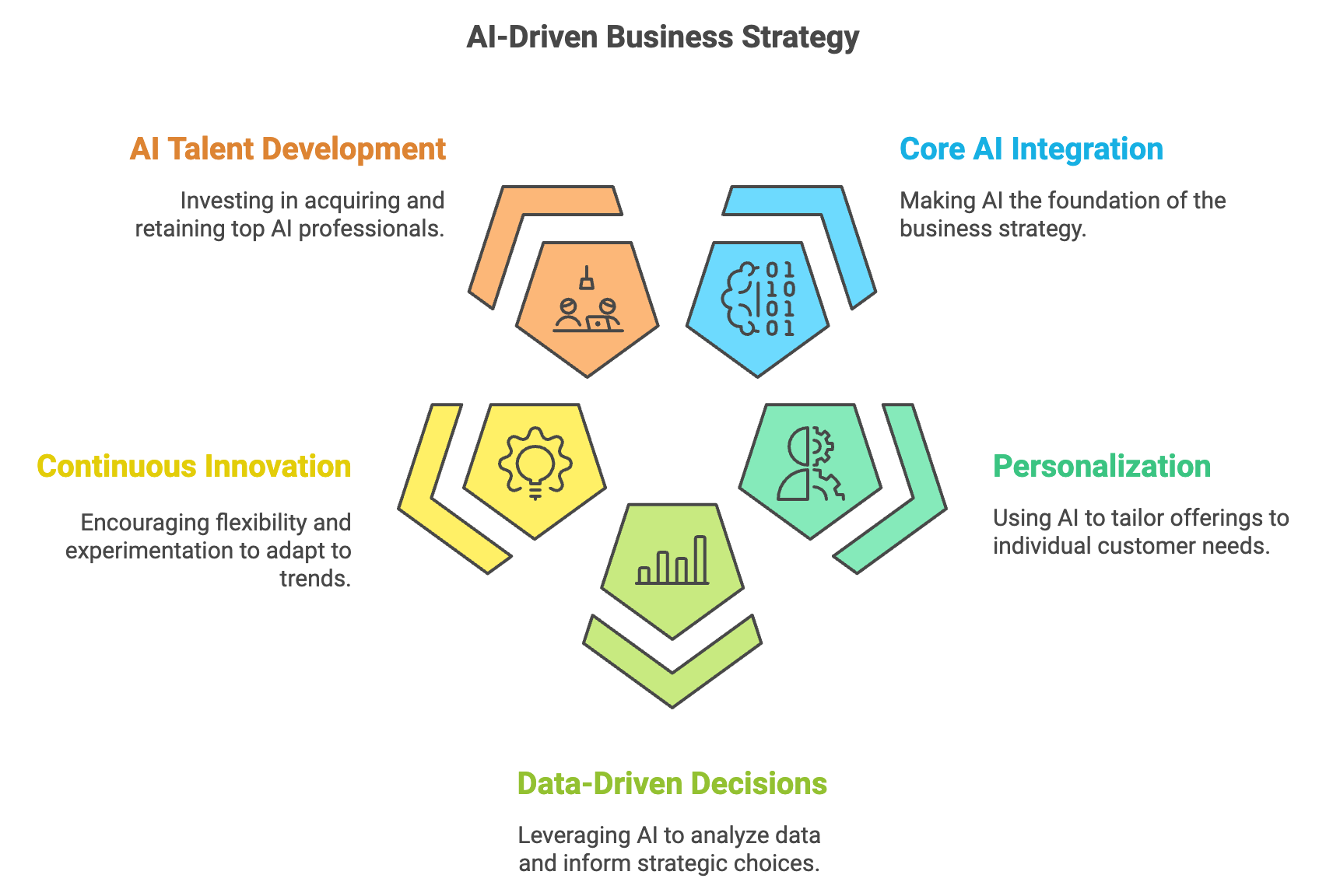
- Focus on AI as a Core Offering: Make AI the foundation of your business, not just an extra feature.
- Personalization and Customization: Use AI to personalize offerings to meet customer needs.
- Data-Driven Decision Making: Use AI to analyze data, find trends, and make informed decisions.
- Continuous Innovation and Adaptation: Stay flexible, keep experimenting, and adapt to new trends.
- Build a Strong AI Team: Invest in finding and keeping top AI talent.
Building Your AI-Powered Business: Practical Steps
Here are some tools that can be helpful for AI businesses:
Tools for Content Creation and Marketing
- ChatGPT: A powerful tool for content creation, code generation, and research. Learn more at ChatGPT by OpenAI.
- Generating high-quality content: Blog posts, articles, social media, marketing materials, etc.
- Creating outlines and checklists: Helps structure your content and cover key points.
- Researching topics and keywords: Saves time in content planning and SEO.
- Synthesia and Haen: Tools for creating AI avatars and videos, especially for personal branding. Check out Synthesia for more information.
- Generating AI avatars: Make videos without appearing in them.
- Creating high-quality videos: Use AI-generated voices and visuals for content creation.
- Framer: AI tool for generating websites, useful for businesses offering website creation services. Learn more at Framer.
Tools for Code Generation and Software Development
- ChatGPT: Besides content, ChatGPT is valuable for code generation.
- Creating code for various platforms: WordPress plugins, order forms, and more.
- Generating specific functionalities: Timers, calculators, and other custom needs.
- Cursor: An AI-assisted coding tool for building applications from scratch. Visit Cursor for more details.
Tools for AI Agent Creation and Business Automation
- Lindy: Platform for creating AI agents that automate client tasks.
- Email communication: Automate follow-ups and meeting setups.
- Negotiating with clients: Saves time and resources.
Other Helpful Tools and Platforms
- chat.joointechmart.com: Free AI tool for validating business ideas and gathering information. Try it at Joointechmart AI Chat.
- OfferVault and ClickBank: Affiliate networks for monetization opportunities for content creators. Visit OfferVault and ClickBank for more information.
These tools can help in many parts of your AI business. Make sure to explore their features, pricing, and capabilities to find the right fit.
If you need more help choosing tools, consider these questions:
- What type of AI business are you focusing on (e.g., content creation, software development)?
- What tasks are you looking to solve with AI tools?
- What is your budget for AI tools?
- What level of technical expertise do you have in your team?
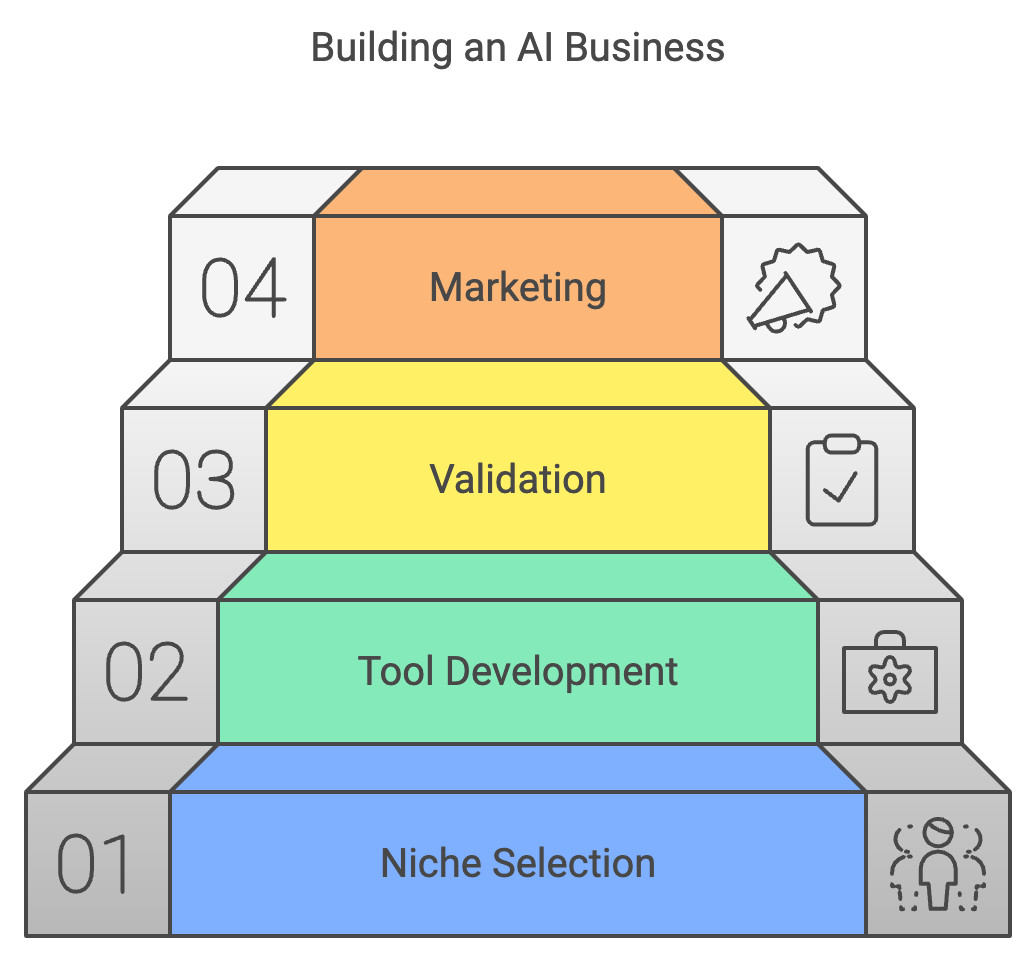
Now that you know the popular AI business models, here are steps to build your own AI business:
- Niche Selection:
- Know your strengths: What are you good at?
- Research the market: Is there a need for your solution? Who are your competitors?
- Understand the industry: Some industries are ready for AI, while others need special solutions.
- Tool Selection and Development:
- Open-source vs. commercial: Pick based on your skills, budget, and needs.
- Cloud vs. private hosting: Think about scalability, cost, and data privacy.
- Use existing tools: Many AI platforms can speed up your work.
- Validation and Iteration:
- Launch an MVP (Minimum Viable Product): Get feedback from users.
- Create feedback loops: Keep improving based on user data.
- Marketing and Sales:
- Use AI-generated content for marketing.
- Use AI advertising tools to reach your audience.
- Network and partner with others.
Addressing Challenges and Ethical Considerations
When building your AI business, think about these challenges:
- Data Privacy and Security: Be transparent and follow data rules.
- Bias in Algorithms: Be aware of bias and work to reduce it.
- Job Impact: Help with job changes by supporting training and skill-building.
The Future of AI-Powered Business Models
AI is always changing. Watch for new trends:
- New Tech: Quantum computing and edge AI will bring new ideas.
- Changing Models: AI marketplaces and personalized AI services will grow.
- Ethical AI: Being open and ethical will help build trust.
Conclusion: Embrace the AI Opportunity
AI is here, and it's changing how we make money. By learning about AI business models and building a strong foundation, you can succeed in this exciting field.
Key Takeaways:
- AI offers many ways to make money online.
- Choose a niche, pick the right tools, test your ideas, and market well.
- Protect data, avoid bias, and think about the impact on jobs.
- Stay updated on trends and be ethical.
Don't just watch AI grow—be part of it. Use AI to create online income and shape the future of business.
